Diskografie
-
1953
Chansons de toujours (1953, b)
-
1964
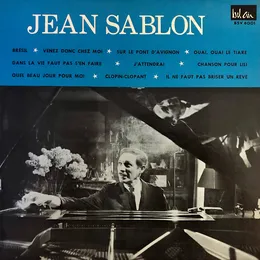
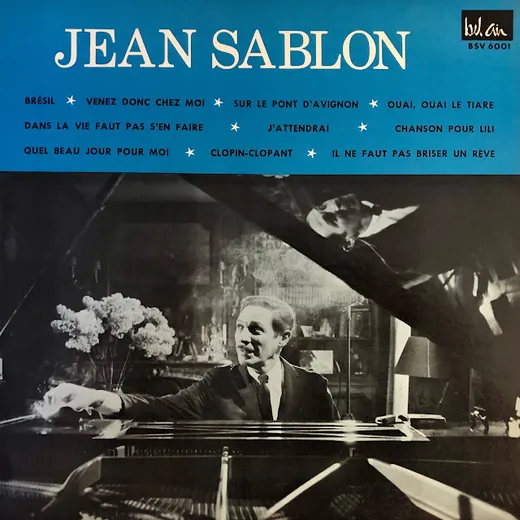
Brésil
-
1964
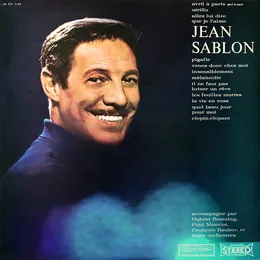
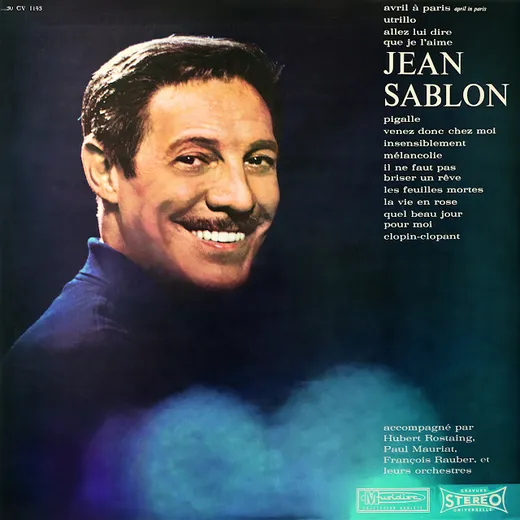
Les feuilles mortes
-
1980
De France et d'ailleurs
-
1998
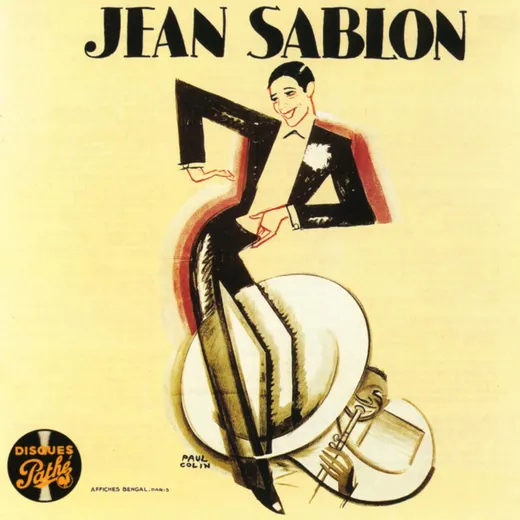
Collection disques Pathé
EPs & Singles 8
Le jour où je te vis / Prenez garde au grand méchant loup
1934 · Single
Cette chanson est pour vous / Darling je vous aime beaucoup
1935 · Single
The Continental / Miss Otis Regrets
1935 · Single
Un amour comme le nôtre / La Petite Île
1935 · Single
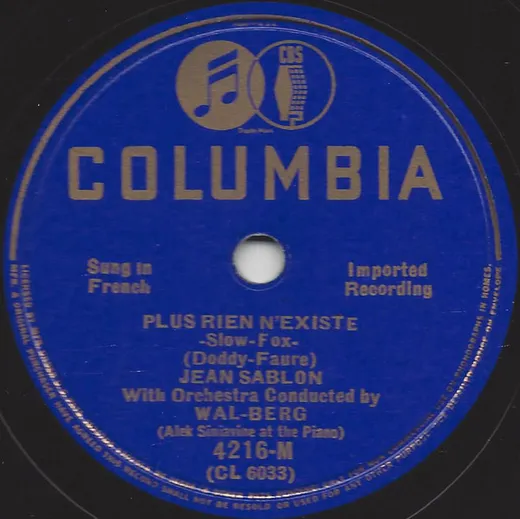
Plus rien n’existe / Pour vous j’avais fait cette chanson
1937 · Single
Sur Le Pont D'Avignon / Je Tire Ma Révérence
1939 · Single
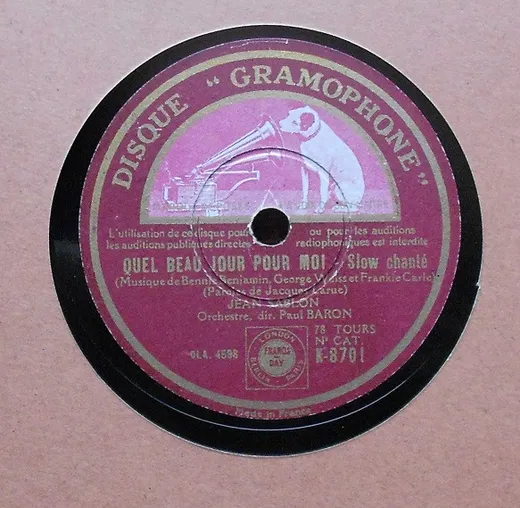
Quel beau jour pour moi / Utrillo
1946 · Single
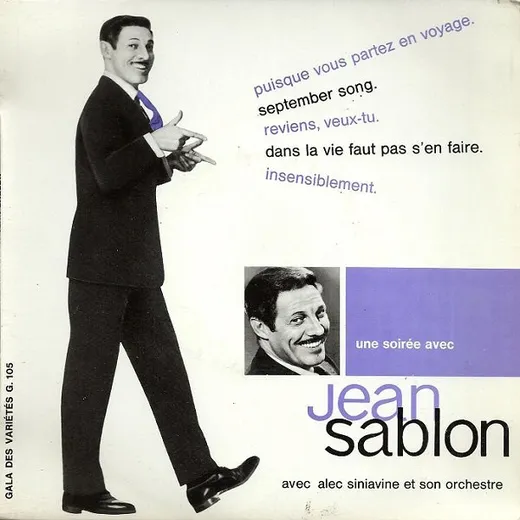
Une soirée avec Jean Sablon
1961 · EP
Live, Kompilationen & Demos 12
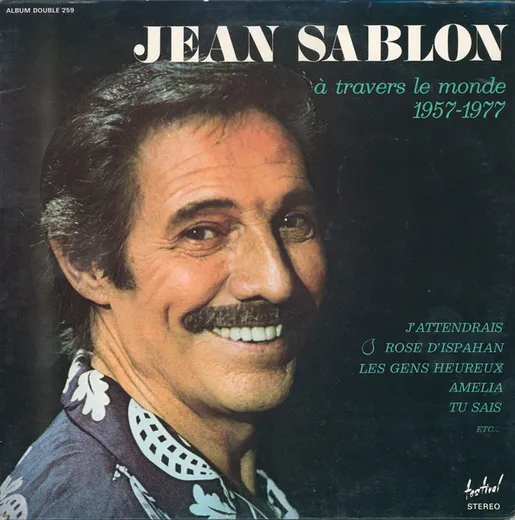
À travers le monde 1957-1977
1977 · Kompilation
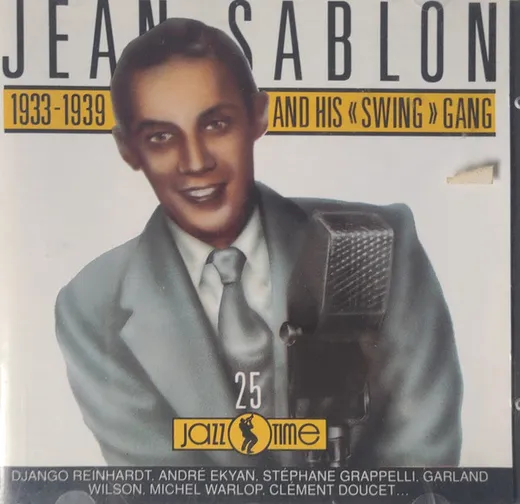
Jean Sablon and His "Swing" Gang - 1933-1939
1990 · Kompilation

Jean Sablon
1994 · Kompilation
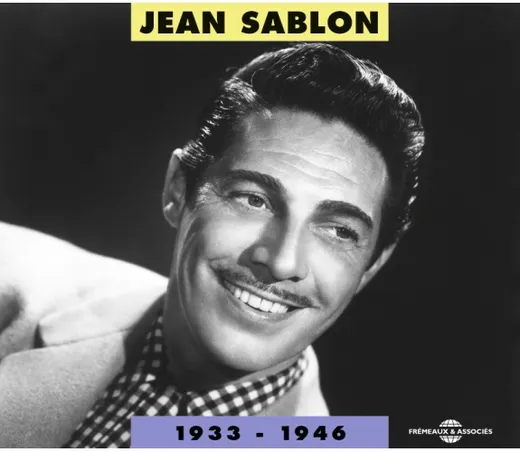
Jean Sablon 1933 – 1946
1997 · Kompilation
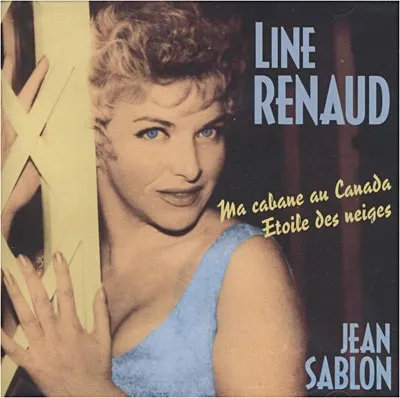
Ma Cabane au Canada
2001 · Kompilation · Demo
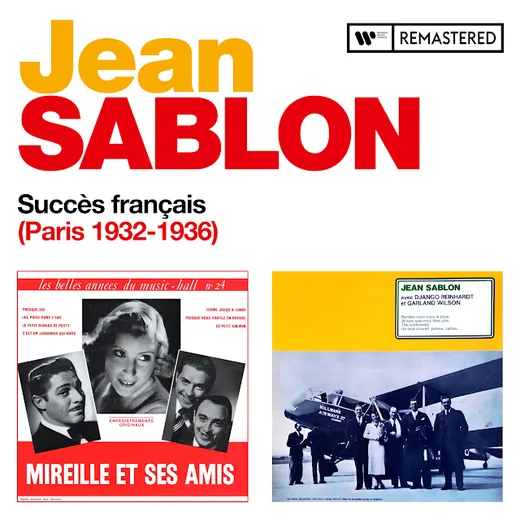
Succès français (Paris 1932-1936)
2003 · Kompilation
The World Famous Crooner 1931-1950
2003 · Kompilation
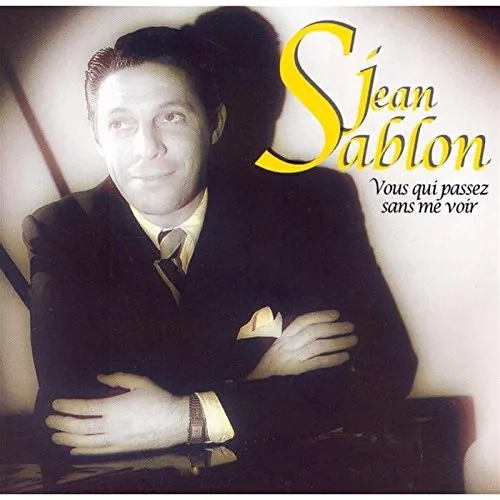
Vous qui passez sans me voir
2003 · Kompilation

BD Music Presents Jean Sablon
2008 · Kompilation
Essential Classics, Vol. 185: Jean Sablon
2024 · Kompilation

EPs Collectors, "Songs of a Boulevardier"
o. J. · Kompilation
Jean Sablon
o. J. · Kompilation
Gezeigt wird eine Auswahl von 25 Veröffentlichungen. Vollständige Diskografie bei MusicBrainz
Beschreibung
Jean Sablon (Nogent-sur-Marne 25 March 1906 – 24 February 1994 at Cannes) was a popular French singer and actor.
The son of a composer, with brothers and sisters who had successful careers of their own in musical entertainment, Jean Sablon studied piano at the Lyceé Charlemagne in Paris. He left before graduating to enroll at the Paris Conservatoire in order to concentrate on a vocal career. He started in the cabarets of Paris at the age of 17, and was subsequently accompanied on his first album by the pianist/composer Mireille, whose song Couchés dans le foin became a great success. Later, he partnered the wildly popular Mistinguett at the Casino de Paris and boosted his career considerably. He was the first cabaret singer to use a microphone in his stage act. In the 1920s he spent time in Brazil where his recordings remain extremely popular today. In 1937 he won the Grand Prix du Disque for the song "Vous qui passez sans me voir," written for him by Charles Trenet and Johnny Hess. That same year, he went to the United States, where he sang on live radio broadcasts for CBS and made several records in the English language. On Broadway, he worked with luminaries such as Cole Porter and George Gershwin. He returned to Paris but with the German occupation of France in World War II, he went back to America for the duration. Jean Sablon became one of the most widely acclaimed male French singers, considered second only in overall lifetime popularity to Maurice Chevalier. His records sold in the millions around the world and he is frequently referred to as the French equivalent of America's Bing Crosby. During his career, he recorded with some of the world's top musicians, including Django Reinhardt and Stéphane Grappelli. Sablon is credited with arranging Reinhardt's debut in a fashionable cabaret in 1933. He is also recognized for his talents as a lyricist and a composer. Sablon appeared in a number of motion pictures and television films performing as a vocalist or pianist, his last coming in 1984 when he sang "April in Paris" in Mistral's Daughter, the popular American TV miniseries filmed in France. Jean Sablon died in 1994 and was interred in the Cimetière du Montparnasse in Paris.
Kommentare
0Bitte anmelden, um zu kommentieren.
Noch keine Kommentare – sei die/der Erste, die/der etwas zu Jean Sablon schreibt!