Thomas Bernhard
Diskografie
Live, Kompilationen & Demos 14
Der Stimmenimitator
1999 · Hoerbuch

Das Kalkwerk
2002 · Hoerbuch
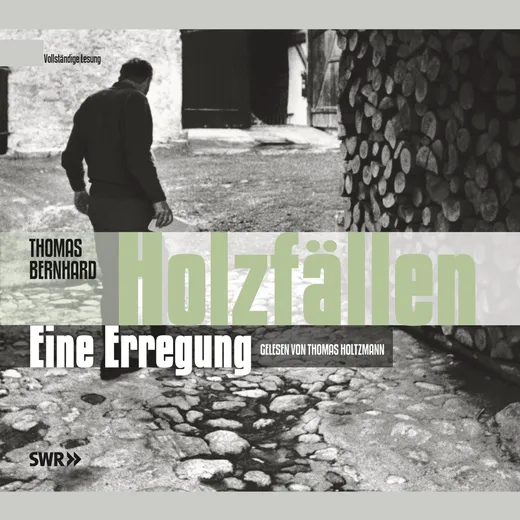
Holzfällen: Eine Erregung
2003 · Hoerbuch
Ereignisse
2003 · Hoerbuch
Elisabeth II.
2004 · Hoerspiel
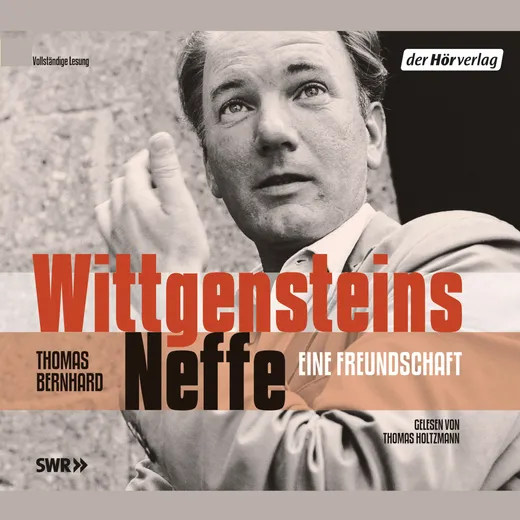
Wittgensteins Neffe: Eine Freundschaft
2004 · Hoerbuch
Beton
2006 · Hoerbuch

Ein Kind
2006 · Hoerbuch
Briefwechsel
2009 · Hoerbuch
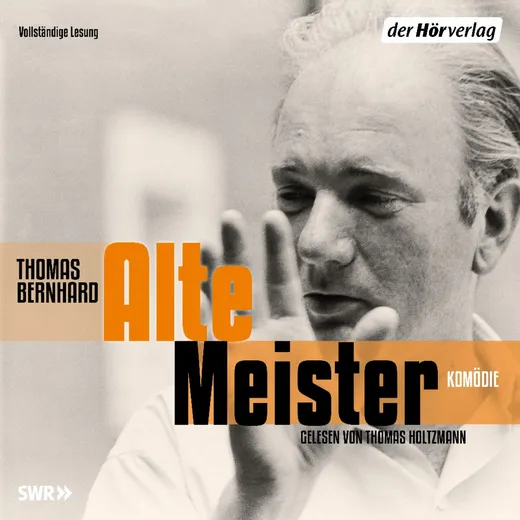
Alte Meister (Komödie)
2011 · Hoerbuch
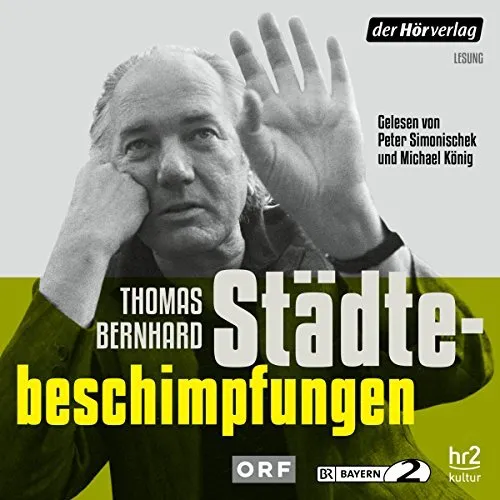
Städtebeschimpfungen
2018 · Hoerbuch

Meine Preise
2018 · Hoerbuch

Bernhard für Boshafte
2019 · Hoerbuch

Die Macht der Gewohnheit
o. J. · Live
Beschreibung
Thomas Bernhard (1931-1989) is seen by many as a genius.
His work is most influenced by the feeling of being left alone (in his childhood and youth) and his incurable illness, which caused him to see death as the ultimate essence of existence. His most typical work are loners' monologues explaining — to a rather silent listener — his view on the state of the world on the basis of a concrete situation. This is true for his plays as well as for his prose, where the monologues are then reported second hand by the listener.
His main protagonists, often scholars — or, as he calls them, Geistesmenschen — denounce in their contumelious tirades against the "stupid populace" everything that matters to the Austrian: the state (often called "Catholic-National-Socialist"), generally respected institutions like Vienna's Burgtheater, or much-loved artists. His work also continually deals with the isolation and self-decomposition of people striving for a perfection impossible to reach, since perfection means stagnancy and therefore death.
"Es ist alles lächerlich, wenn man an den Tod denkt" (Everything is ridiculous, when one thinks of Death) was his comment when he received a minor Austrian national award in 1968, which resulted in one of the many public scandals he caused over the years and which became part of his fame. His novel Holzfällen (1984), for instance, could not be published for years due to a defamation claim of a former friend. Many of his plays—above all Heldenplatz (1988)—were met with criticism from conservative circles, who claimed they dirtied Austria's reputation. Heldenplatz as well as the other plays Bernhard wrote in those years were put on stage by the controversial Burgtheater director Claus Peymann, who was often criticized for staging contemporary plays at that place of fine art.
Even in his death Bernhard caused disturbance by his—as he supposedly called it—posthumous literary emigration, by disallowing all publication and stagings of his work within Austria's borders. His heirs, however, have since allowed this from time to time.
Kommentare
0Bitte anmelden, um zu kommentieren.
Noch keine Kommentare – sei die/der Erste, die/der etwas zu Thomas Bernhard schreibt!