Diskografie
-
1955
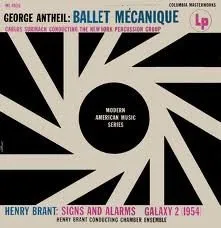
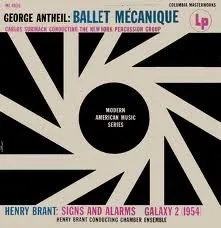
George Antheil: Ballet mécanique / Henry Brant: Signs & Alarms / Galaxy 2 (1954)
-
1957
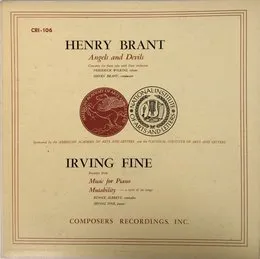
Brant: Angels and Devils; Concerto for flute solo with flute orchestra / Fine: Excerpts from Music for Piano / Fine: Mutability – a cycle of six songs
-
1984
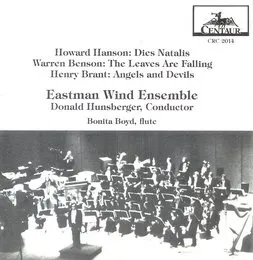
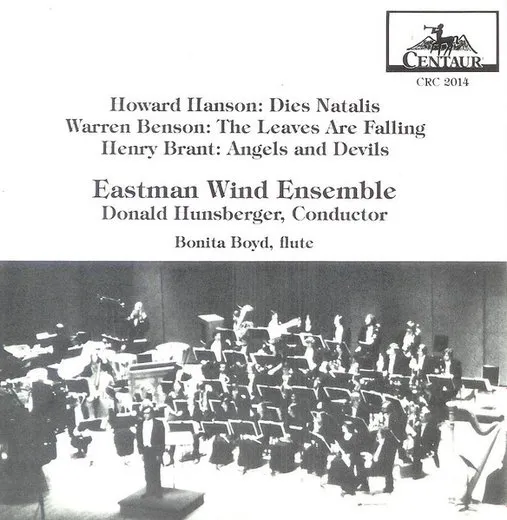
Hanson: Dies Natalis / Benson: The Leaves Are Falling / Brant: Angels and Devils
-
1995
Brant / Scelsi / Wolpe / Xenakis / Cage / Glass / Feldman
-
2001
Y Bolanzero

-
2003
The Henry Brant Collection, Volume 1


-
2006
Music for Massed Flutes
-
2006
The Henry Brant Collection, Volume 5: Autumn Hurricanes
-
2006
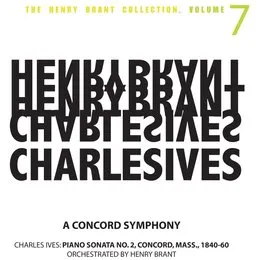
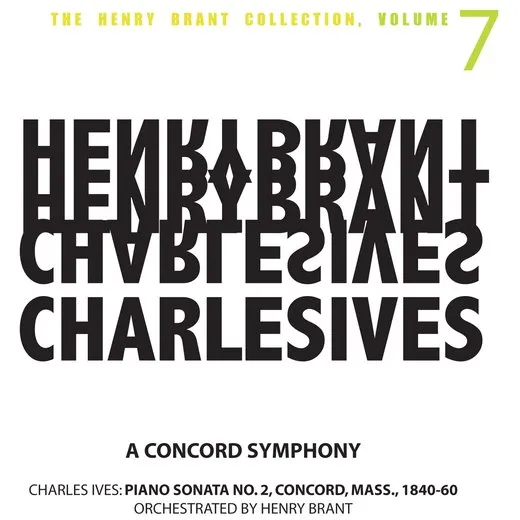
The Henry Brant Collection, Volume 7: A Concord Symphony
-
2006
The Henry Brant Collection, Volume 3
-
2007
The Henry Brant Collection, Volume 9
-
2007
The Henry Brant Collection, Volume 6: Rainforest
-
2011
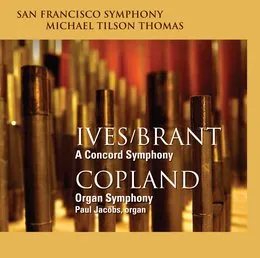
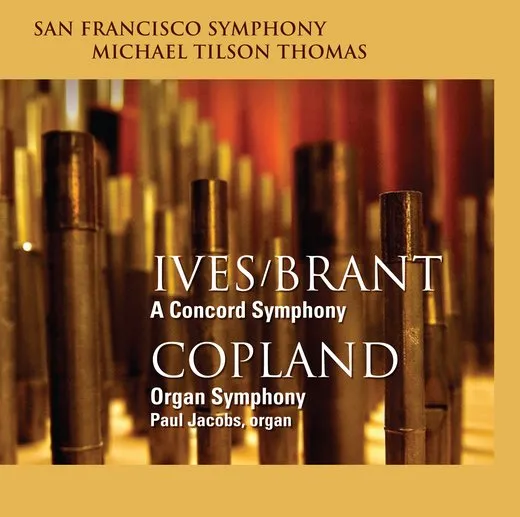
Ives/Brant: A Concord Symphony / Copland: Organ Symphony
EPs & Singles 1

Live, Kompilationen & Demos 3
Beschreibung
Henry Brant (b. September 15th 1913, d. April 26th 2008) was a composer and pioneer of acoustic spatial music. His works often placed musicians in unconventional positions throughout a concert hall or in outdoor settings for particular musical effects. Inspired by the music of Charles Ives and Teo Macero, Brant's spatial composing techniques created complex instrumental textures and took advantage of hall acoustics and resonance. He has written over 100 spatial works which often employ contrasting musical styles and very large instrumental forces.
Born in a coven in Montreol, Canada, Brant began composing at the age of eight using his own homemade instruments. He studied for three years at the McGill Conservatorium of Music in Montreal, then moved to New York City in 1929. There he continued his education at the Institute of Musical Art and Juilliard School of Music, and studied privately with George Antheil, Fritz Mahler, and Wallingford Riegger. While pursuing his experimental work Brant composed and conducted for radio, film, ballet, and jazz, working with musicians Benny Goodman and Andre Kostelanetz. In the late 1940's Brant taught at Columbia University and the Juilliard School, and from 1957 to 1980 at Bennington College in Vermont. Since 1981 he has made his home in Santa Barbara, California, until his death in April 2008.
Brant is a recipient of awards and fellowships from the Ford, Fromm, Guggenheim, and Koussevitzky Foundations, American Music Center, and National Endowment for the Arts. He was the first composer from the United States to win the Prix Italia (1955), and in 2002 he received the Pulitzer Prize for Ice Field, a work for organ and large orchestral groups premiered by the San Francicso Symphony in 2001. Other recent premieres include Brant's "extraplanetary environmental oratorio" Wind, Water, Clouds & Fire (2004) for four choruses and 25 instruments, commissioned by Present Music and premiered at St. John's Cathedral in Milwaukee, Wisconsin; Tremors (2004) for four singers and 16 instruments, premiered at the Getty Center in Los Angeles, California; and Crystal Antiphonies (2000) for the Swarovski Wind Ensemble and Vienna Radio Symphony Orchestra, premiered at the Klangspuren Festival in Schwaz, Austria.
Kommentare
0Bitte anmelden, um zu kommentieren.
Noch keine Kommentare – sei die/der Erste, die/der etwas zu Henry Brant schreibt!