Beschreibung
Sir Charles Villiers Stanford (September 30, 1852 – March 29, 1924) was an Irish composer.
Stanford was born in Dublin, the only son of John Stanford, examiner in the Court of Chancery (Dublin) and clerk of the Crown, County Meath. Both parents were accomplished amateur musicians; his father sang bass (and was also a cellist [1] and his mother was a pianist. Charles trained under R. M. Levey (violin), Miss Meeke, Mrs Joseph Robinson, Miss Flynn and Michael Quarry (piano); and Sir Robert Stewart taught him composition and organ. His precocious ability was recorded in an article in The Musical Times in December 1898.
He came to London as a pupil of Arthur O'Leary and Ernst Pauer in 1862, and in 1870 won a scholarship to Queens' College, Cambridge, moving to Trinity College in 1873, and succeeding J. L. Hopkins as college organist, a post he held until 1892. His appointment as conductor of the Cambridge University Musical Society gave him great opportunities, and the fame which the society soon obtained was in the main due to Stanford's energies.
During his tenure many interesting performances and revivals took place. From 1874 to 1877 he was given leave of absence for part of each year to complete his studies in Germany, where he studied with Carl Reinecke and Friedrich Kiel. He took his BA degree in 1874 and MA in 1878, and was given the honorary degree of D.Mus. at Oxford in 1883 and at Cambridge in 1888.
He first became known as a composer with his incidental music to Tennyson's Queen Mary (Lyceum, 1876); and in 1881 his first opera, The Veiled Prophet, was given at Hanover (revived at Covent Garden, 1893); this was succeeded by Savonarola (Hamburg, April, and Covent Garden, July 1884), and The Canterbury Pilgrims (Drury Lane, 1884). A long interval separates these from his later operas: Shamus O'Brien, a delightful piece of Irish dramatic writing (Opera Comique, 1896) Much Ado About Nothing (Covent Garden, 1901), The Critic (Shaftesbury Theatre, London, 1916), and The Travelling Companion (David Lewis Theatre, Liverpool, 1925).
He was appointed professor of composition at the Royal College of Music in 1883; was conductor of the Bach Choir from 1886 to 1902; was professor of music at Cambridge, succeeding Sir G. A. Macfarren from 1887; conductor of the Leeds Philharmonic Society from 1897 to 1909, and of the Leeds Festival from 1901 to 1910. He was knighted in 1902.
Stanford was particularly known in his day for his choral works, chiefly commissioned for performances at the great English provincial festivals. These include two oratorios, a requiem (1897), a Stabat Mater (1907), and many secular works, often with a nautical theme, including The Revenge (1886), The Voyage of Maeldune (1889), Songs of the Sea (1904), and Songs of the Fleet (1910). His church music still holds a central place among Anglican compositions; and his editions of Irish and other traditional songs were well known.
His instrumental works include seven symphonies, six Irish Rhapsodies for orchestra, several works for organ, concertos for violin, clarinet, and piano, and many chamber compositions, including eight string quartets. He also composed songs, part-songs, madrigals, and incidental music to the Eumenides and Oedipus Rex (as performed at Cambridge), as well as to Tennyson's Becket. His music shows the influence of Brahms and Schumann, and to a lesser extent of Irish folk music; he was generally unsympathetic to more modern developments. Although there has recently been a revival of interest in his larger works after a long period of neglect, his chief importance is often held to be as a teacher of many English composers of the next generation, including Holst, Vaughan Williams, Frank Bridge, Samuel Coleridge-Taylor, Cecil Forsyth, Charles Wood (who succeeded him as music professor) and Herbert Howells. He was notoriously irascible and quarrelled with many of his contemporaries, including Elgar, Sullivan[citation needed] and Parry. He published several books, including an autobiography, Pages from an Unwritten Diary (1914).
Alben
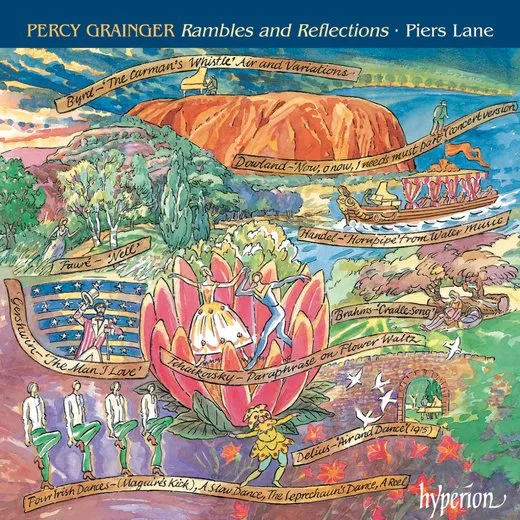
Grainger: Rambles and Reflections
2002-06-01
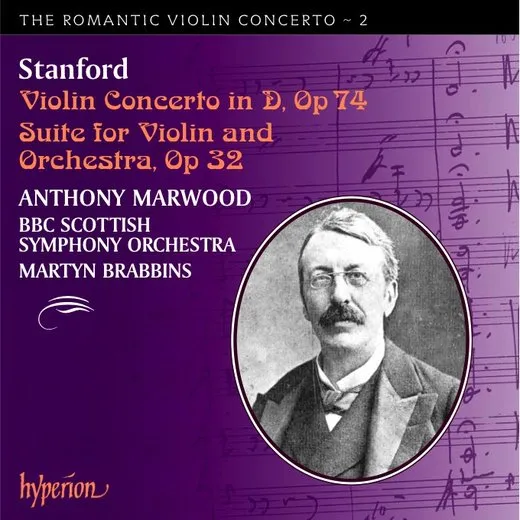
The Romantic Violin Concerto, Volume 2: Violin Concerto in D, op. 74 / Suite for Violin and Orchestra, op. 32
2000-11

Songs 2
2000-06
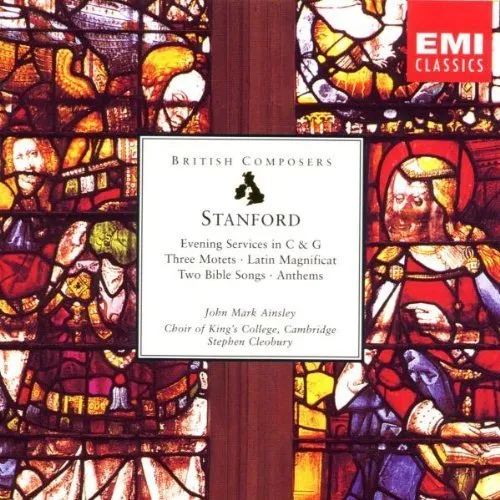
Evening Services & Anthems
2000-05-20
Music for Violin and Piano
1999
Piano Concerto no. 2 / Concert Variations on "Down Among the Dead Men"
1998-07

Sacred Choral Music, Volume 3
1998-05
Sacred Choral Music, Volume 2
1998-02
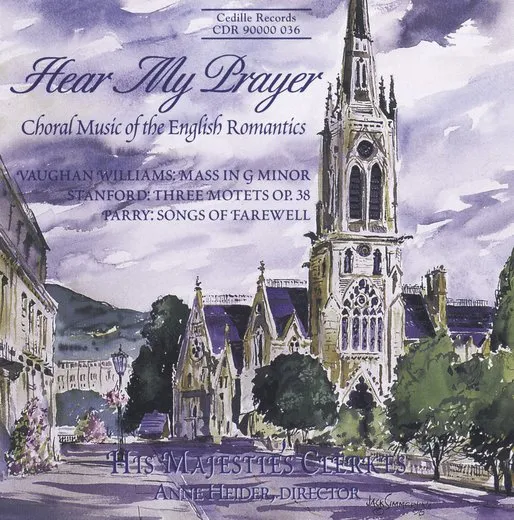
Hear My Prayer: Choral Music of the English Romantics
1998
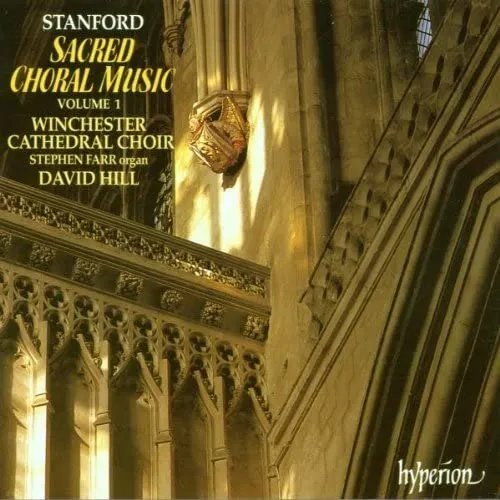
Sacred Choral Music, Volume 1
1997-11
Stabat Mater, Bible Songs & Te Deum laudamus
1997-06-01
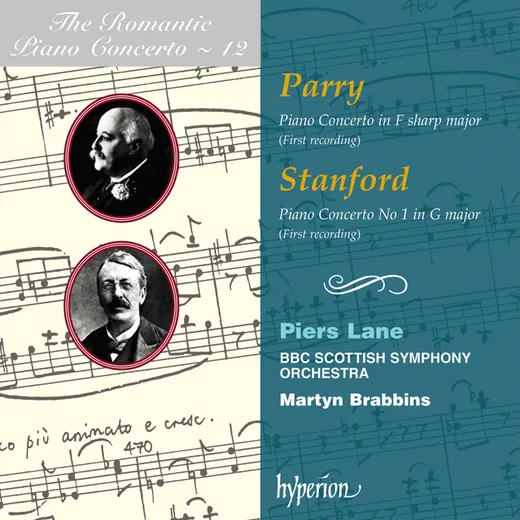
The Romantic Piano Concerto, Volume 12: Parry: Piano Concerto in F-sharp major / Stanford: Piano Concerto no. 1 in G major
1995-11
Parry: Songs of Farewell / Stanford: Three Motets / Stanford: Eternal Father / Stanford: Magnificat
1994-10-05
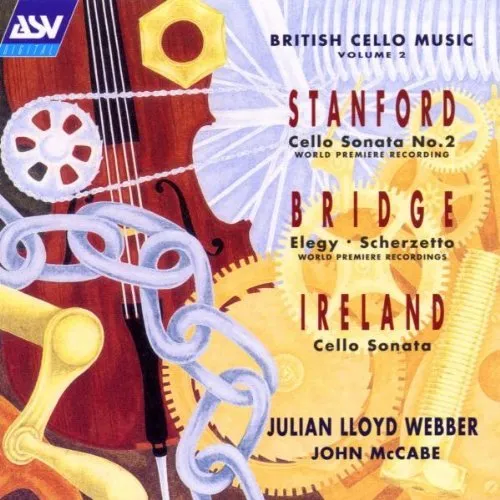
British Cello Music, Volume 2
1992
Finzi: Clarinet Concerto / 5 Bagatelles / Stanford: Clarinet Concerto / 3 Intermezzi
1992
I Will Lift Up Mine Eyes
1992
Symphony no. 1 in B flat major / Irish Rhapsody no. 2 "The Lament for the Son of Ossian"
1992
Symphony No. 2, “Elegiac” / Clarinet Concerto
1991-09-01
20th Century Sacred Music
1991
Symphony No. 4, Irish Rhapsody No. 6 & Oedipus Rex Prelude
1990-11-01
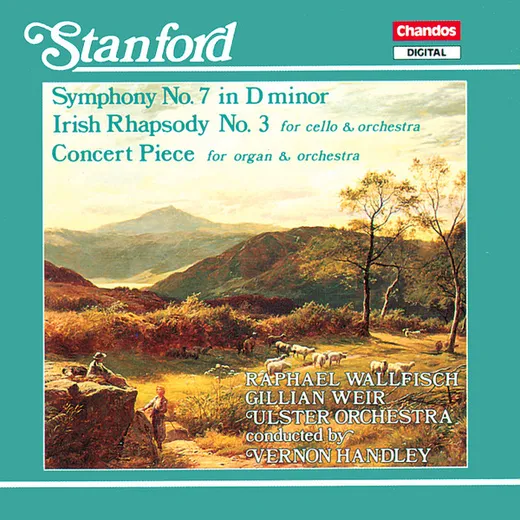
Symphony no. 7 in D minor / Irish Rhapsody no. 3 / Concert Piece
1990-06-01

Music for Clarinet and Piano
1989-01
Irish Rhapsody No. 1 / Symphony No. 6
1988-08-01
Symphony No. 5 in D Major & Irish Rhapsody No. 4
1988-04-01

Symphony no. 3 in F minor "Irish" / Irish Rhapsody no. 5
1987
Kommentare
0Bitte anmelden, um zu kommentieren.
Noch keine Kommentare – sei die/der Erste, die/der etwas zu Sir Charles Villiers Stanford schreibt!