Diskografie
-
1953
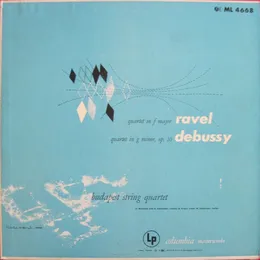
Ravel: Quartet in F major / Debussy: Quartet in G minor, op. 10
-
1956
Quartet in F major, op. 95 “American” / Quartet in E-flat major, op. 51
-
1956
The Last Quartets of Mozart, Volume I
-
1956
The Last Quartets of Mozart, Volume II
-
1958
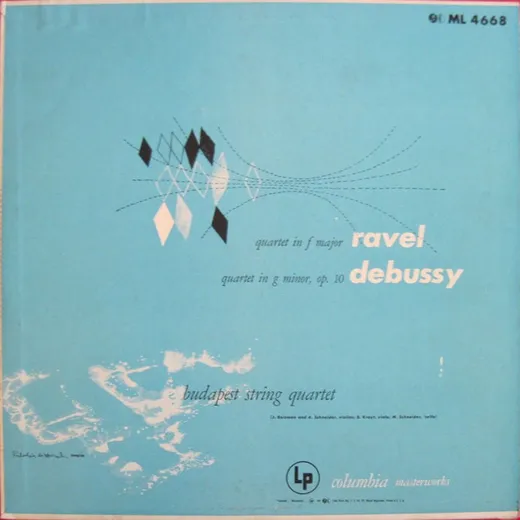
Ravel: Quartet in F major / Debussy: Quartet in G minor, op. 10
-
1983
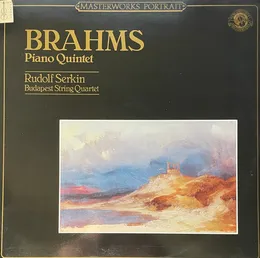
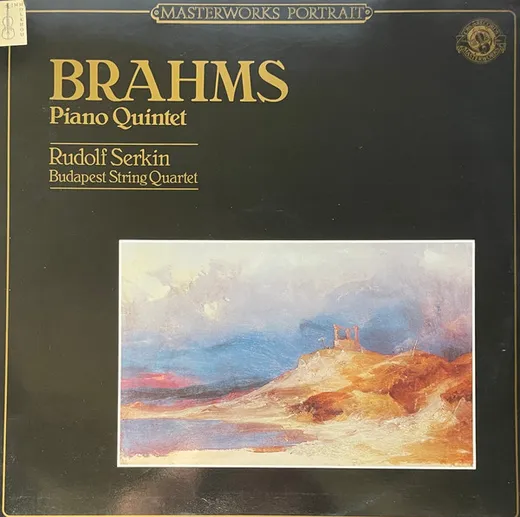
Brahms Piano Quintet
-
1989
Strings Quintets K. 515 & 516
-
1990
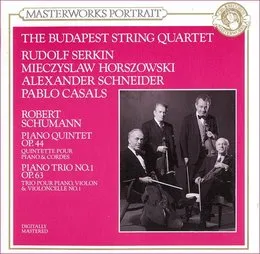
Piano Quintet op. 44 / Piano Trio no. 1 op. 63
-
1990
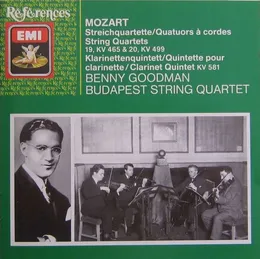
String Quartets 19, KV 465 & 20, KV 499 / Clarinet Quintet KV 581
-
1990
Trout Quintet / Death and the Maiden

-
1991
String Quartets Op. 59 No. 3 "Razumovsky", Op. 74 "Harp" / Great Fugue in B-flat minor


-
1991
String Quartets op. 59 no. 1 & 2 “Razumovsky”
-
1991
“Haydn” Quartets

-
1992
Beethoven: “Kakadu” Variations / Schubert: “Trout” Quintet
-
1996
Five String Quartets
-
1996
String Quartet No. 1 / String Quartet No. 2 / Trio élégiaque, Op. 9

-
1997
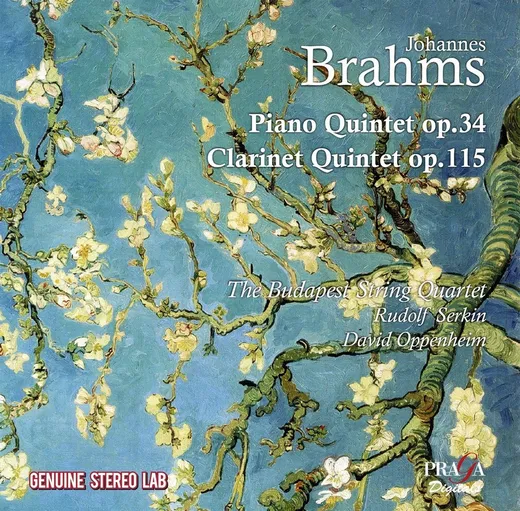
Brahms: Piano Quintet op. 34 / Dvorak: Piano Quintet op. 81
-
1997
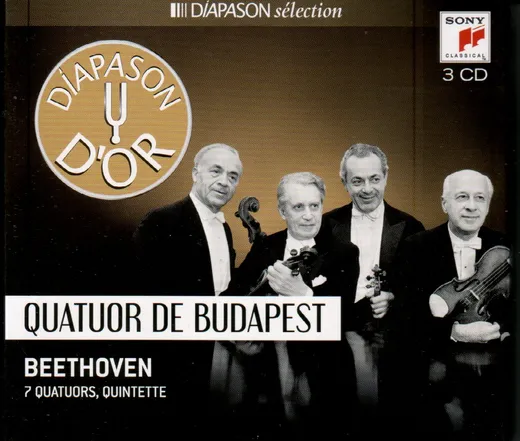
String Quartets op. 127, op. 131, op.132, op. 135, minuet from op 18, no. 5


Live, Kompilationen & Demos 2
Gezeigt wird eine Auswahl von 25 Veröffentlichungen. Vollständige Diskografie bei MusicBrainz
Beschreibung
The Budapest String Quartet was formed in 1917 by four friends, all members of opera orchestras that had ceased playing owing to World War I The members were all protégés of Jenő Hubay (violin), a Hungarian pupil of Joseph Joachim and David Popper (cello), a Bohemian. Hubay and Popper had helped to make Budapest a major centre for musical education, attracting famous students such as Josef Szigeti. Hubay and Popper had supported Sándor Végh and Feri Roth in the formation of quartets, and were themselves part of an earlier Budapest Quartet, the new quartet being named partly in honour of that. The debut recital of the new Budapest String Quartet (in Hungarian: Budapesti Vónosnégyes), took place in December 1917 in Kolozsvár, then in Hungary, now called Cluj-Napoca, in present-day Romania.
The quartet was established with quite forward-looking rules:
1. All disputes, musical or business, were to be resolved by a vote. In case of a tie—no change. 2. Players were not allowed to take engagements outside the quartet. 3. Players were paid equally—no preference was given for the leader (first violin). 4. No wives or girlfriends were permitted at rehearsals or discussions.
No previous quartet had attempted to live entirely on the proceeds from its concerts. This was a brave decision for the time. The original members were Emil Hauser, aged 24, from Budapest; Alfred Indig, from Hungary; István Ipolyi, aged 31, from Újvidék in Hungary; and Harry Son from Rotterdam, Holland.
The Budapest probably went on longer than any quartet in musical history, maintaining a continuity of style despite changes in personnel.
Kommentare
0Bitte anmelden, um zu kommentieren.
Noch keine Kommentare – sei die/der Erste, die/der etwas zu Budapest String Quartet schreibt!