Beschreibung
Heinrich Schütz (1585-1672) was a German composer and organist, generally regarded as the most important German composer before Johann Sebastian Bach, and often considered to be one of the most important composers of the first half of the seventeenth century along with Claudio Monteverdi. He wrote what is thought to be the first German opera, Dafne, performed at Torgau in 1627; the music has since been lost, however. He is commemorated as a musician in the Calendar of Saints of the Lutheran Church on 28th July, with Johann Sebastian Bach and George Frideric Handel. He was buried in the Dresden Frauenkirche.
Schütz's compositions show the influence of his teacher Giovanni Gabrieli (displayed most notably in Schütz's use of resplendent polychoral and concertato styles) and of Monteverdi. Additionally, the influence of the Dutch composers of the sixteenth century is also prominent in his work. His best known works are in the field of sacred music, ranging from solo voice with instrumental accompaniment to a cappella choral music. Schütz's music, while starting off in the most progressive styles early in his career, eventually grows into a style that is simple and almost austere, culminating in his late Passion settings. Practical considerations were certainly responsible for part of this change: the Thirty Years' War had devastated the musical infrastructure of Germany, and it was no longer practical or even possible to put on the gigantic works in the Venetian style which marked his earlier period.
Schütz was one of the last composers to write in a modal style. His harmonies often result from the contrapuntal alignment of voices rather than from any sense of harmonic motion; contrastingly, much of his music shows a strong tonal pull when approaching cadences. His music includes a great deal of imitation, but structured in such a way that the successive voices do not necessarily enter after the same number of beats or at predictable intervallic distances. Schütz's writing often includes intense dissonances caused by the contrapuntal motion of voices moving in correct individual linear motion, but resulting in startling harmonic tension. Above all, his music displays extreme sensitivity to the accents and meaning of the text, which is often conveyed using special technical figures drawn from musica poetica, themselves drawn from or created in analogy to the verbal figures of classical rhetoric.
Almost no secular music by Schütz has survived, save for a few domestic songs (Arien) and no purely instrumental music at all (unless one counts the short instrumental movement entitled "sinfonia" that encloses the dialogue of Die sieben Worte), even though he had a reputation as one of the finest organists in Germany.
Schütz was of great importance in bringing new musical ideas to Germany from Italy, and as such had a great influence on the German music which was to follow. The style of the north German organ school derives largely from Schütz (as well as from the Dutchman Jan Pieterszoon Sweelinck); a century later this music was to culminate in the work of J.S. Bach.
Alben
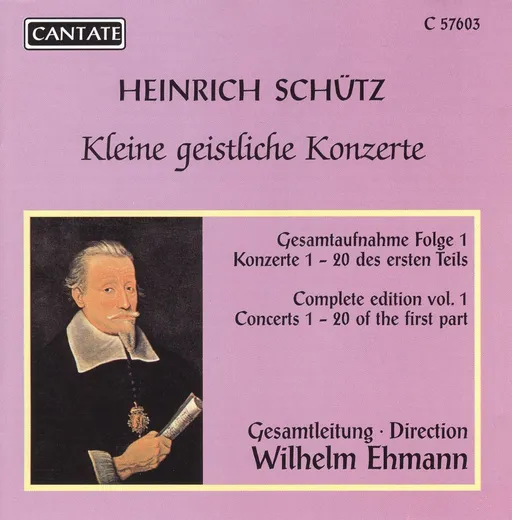
Kleine geistliche Konzerte
1995-04-18
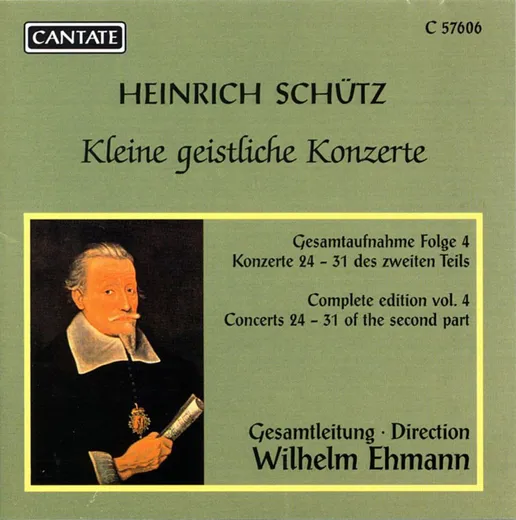
Kleine geistliche Konzerte IV
1995
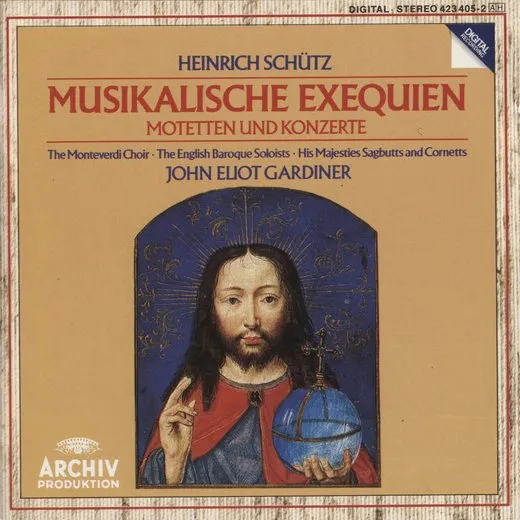
Musikalische Exequien / Motetten und Konzerte
1988-07-18
Festliche Motetten alter Meister
1988
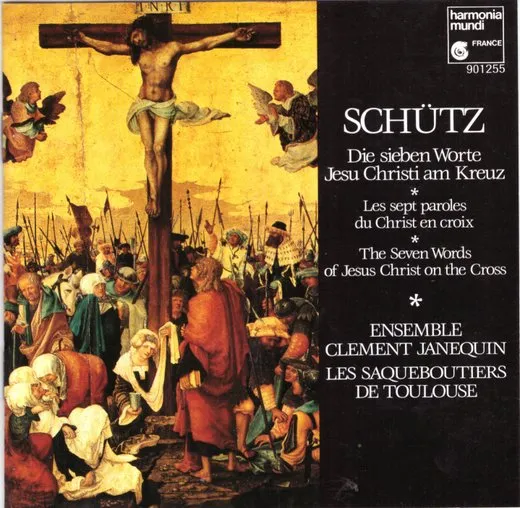
Die sieben Worte Jesu Christi am Kreuz
1987
Les trois âges du père de la musique allemande
1987
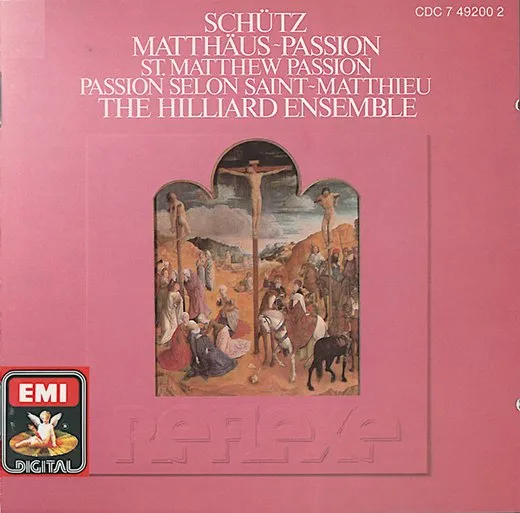
Matthäus-Passion
1987
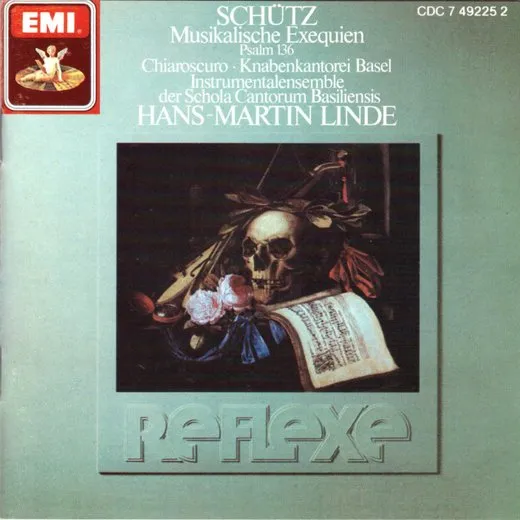
Schütz - Musikalische Exequien - Psalm 136
1987
Liebe und Klage in der Musik von Heinrich Schütz
1986
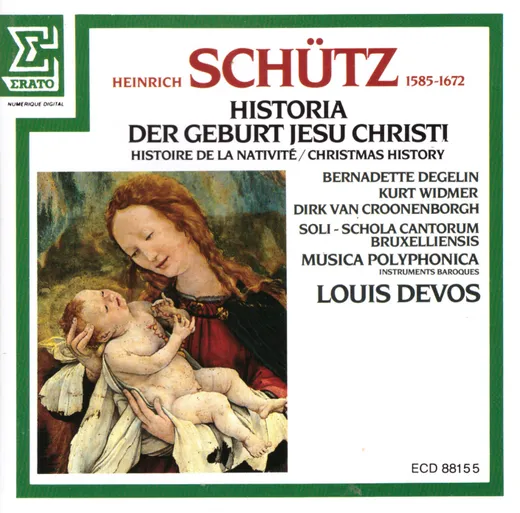
Schütz - Historia der geburt Jesu Christi
1986
Sinfoniae Sacrae
1986
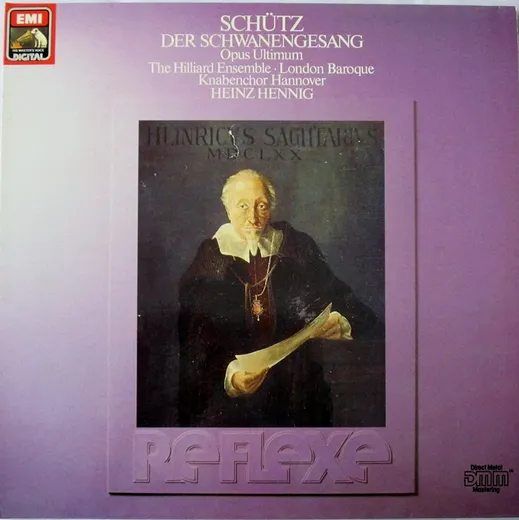
Der Schwanengesang (Opus Ultimum)
1985
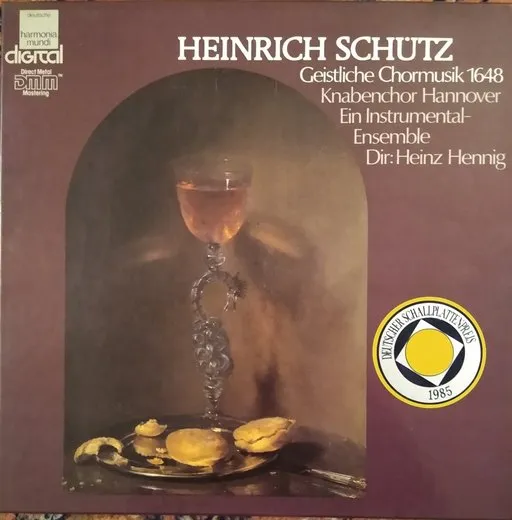
Geistliche Chormusik 1648
1985
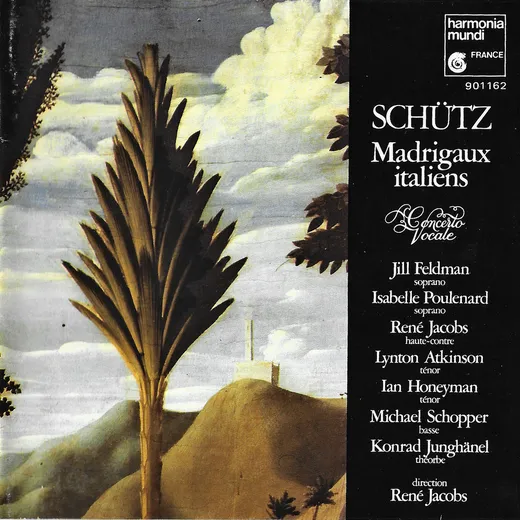
Madrigaux Italiens
1985
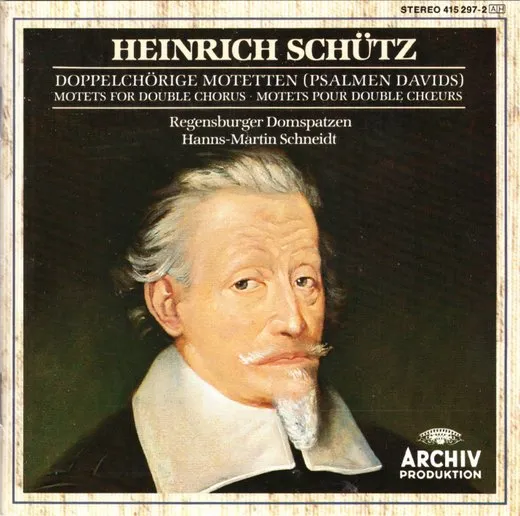
Motets pour Double Chœur
1985
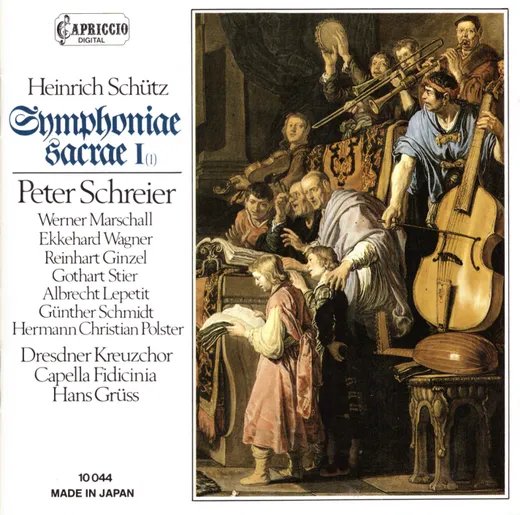
Symphoniae Sacrae I
1985
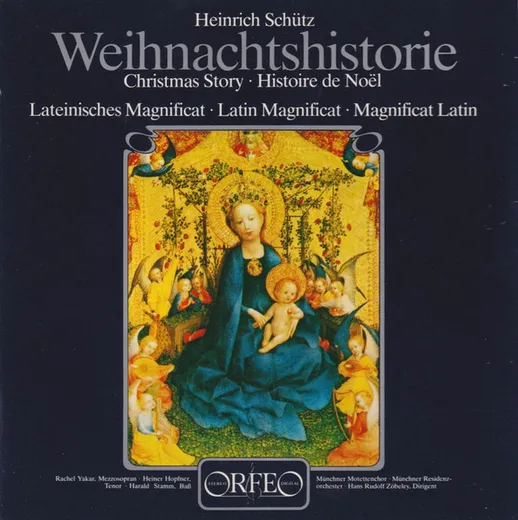
Weihnachtshistorie, Lateinisches Magnificat
1984
Psalmen Davids SWV 28, 30, 31, 37, 280 und 482 / Dialogo per la Pascua SWV 443 / Ich bin die Auferstehung SWV 464
1983
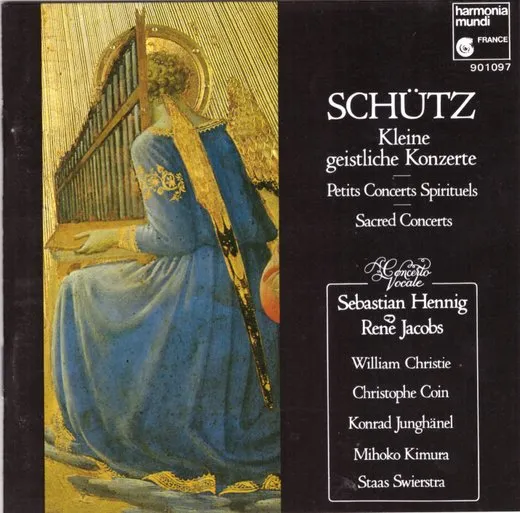
Schütz - Kleine geistliche Konzerte & Symphoniae Sacrae
1982
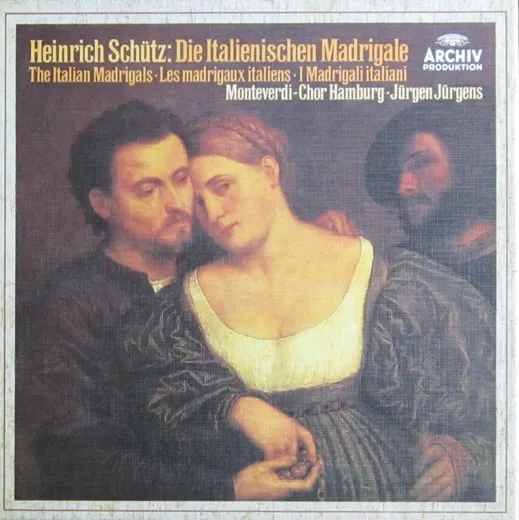
Die Italienischen Madrigale
1976
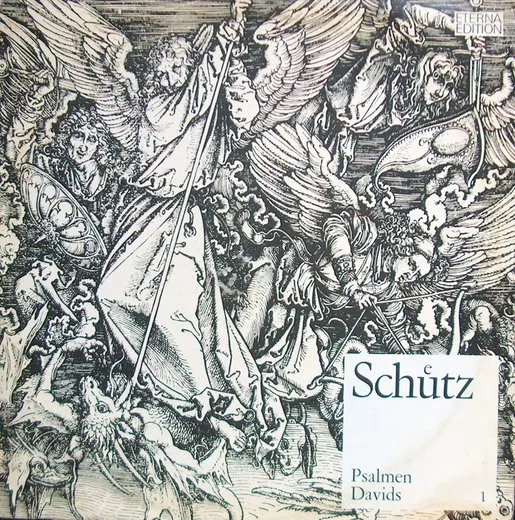
Psalmen Davids 1
1973
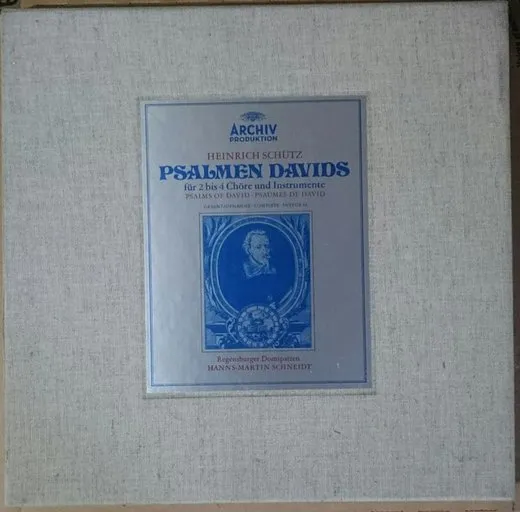
Psalmen Davids Für 2 Bis 4 Chöre Und Instrumente - Psalms Of David - Psaumes De David (Gesamtaufnahme - Complete - Integral)
1972

Doppelchörige Motetten. Psalmen und "Deutsches Magnificat"
1966
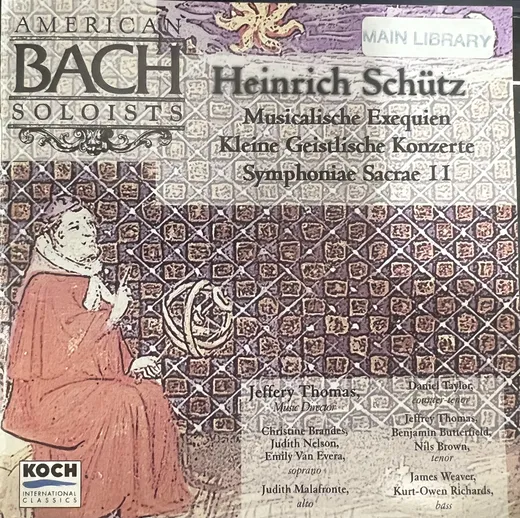
Musicalische Exequien - Kleine Geistliche Konzerte - Symphoniae Sacrae
Sacred Choral Music 1648
Kommentare
0Bitte anmelden, um zu kommentieren.
Noch keine Kommentare – sei die/der Erste, die/der etwas zu Heinrich Schütz schreibt!