Diskografie
-
1940
Le Sacre du Printemps (The Rite of Spring)

-
1950
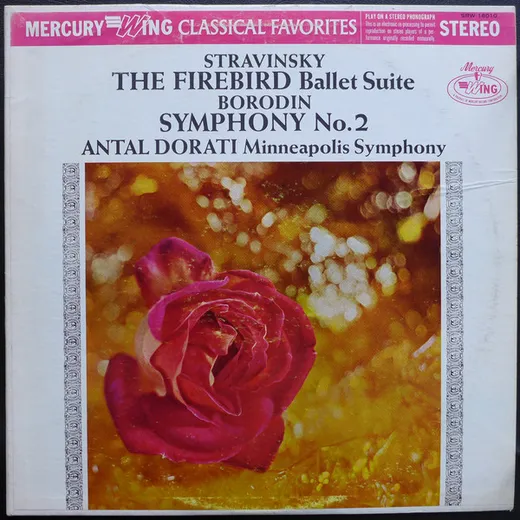
Petrouchka
-
1951
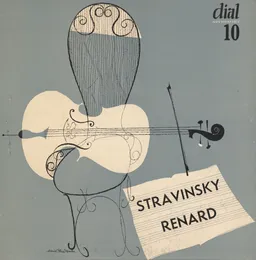
Renard
-
1951
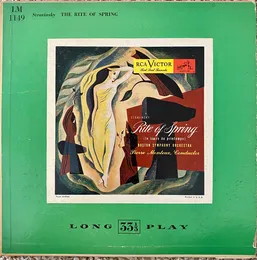
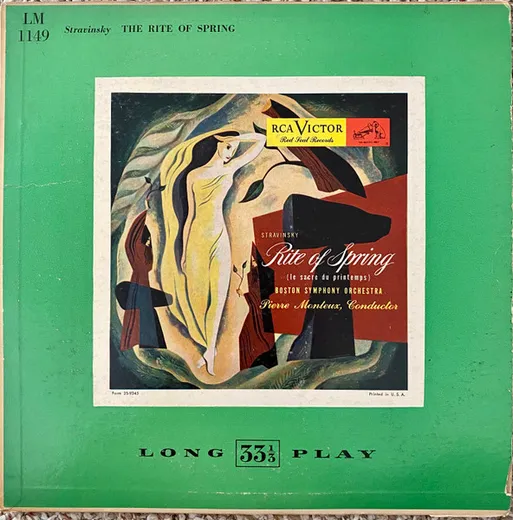
The Rite of Spring
-
1951
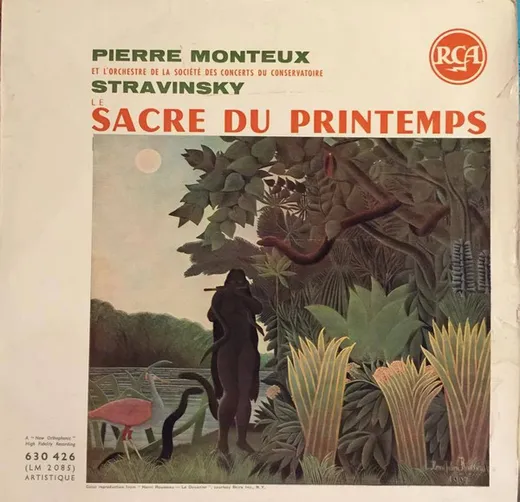
Le Sacre du printemps

Live, Kompilationen & Demos 16
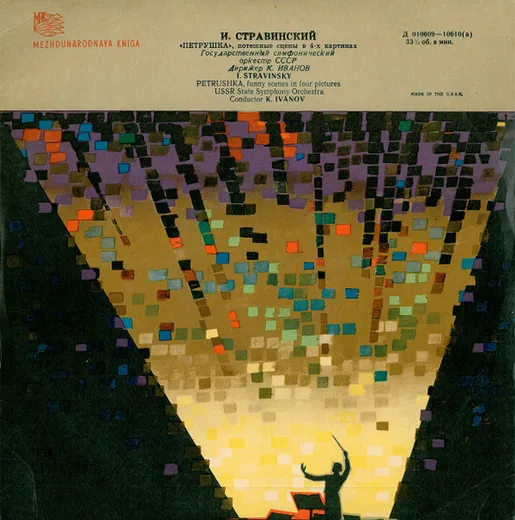
Petrouchka
1963 · Sonstiges
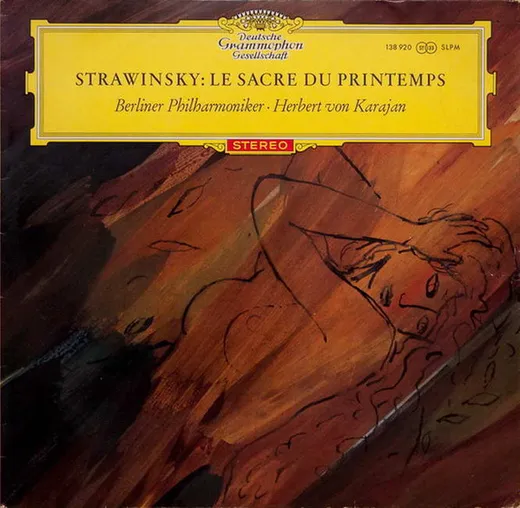
Le Sacre du printemps
1964 · Sonstiges
Konzert Für Klavier, Bläser, Kontrabässe Und Pauken (1924) / Sérénade En La (1925) / Sonate (1924)
1982 · Sonstiges

Symphonic Scherzos
1986 · Sonstiges
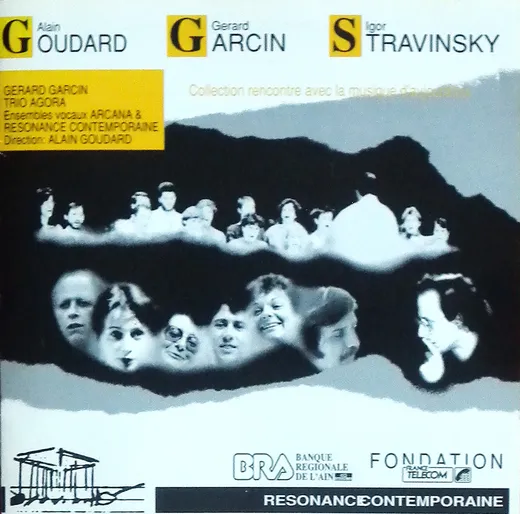
Goudard / Garcin / Stravinsky
1990 · Sonstiges

The Recorded Legacy
1991 · Kompilation
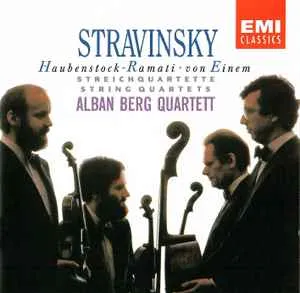
Works For String Quartet
1992 · Sonstiges
Les Noces - L'histoire Du Soldat, Suite - Pribaoutki - Cats Cradle Songs - Three Shakespeare Songs - In Memoriam Dylan Thomas
1994 · Kompilation
Los grandes de la música clasica: Igor Stravinski, vol. 3
1995 · Sonstiges
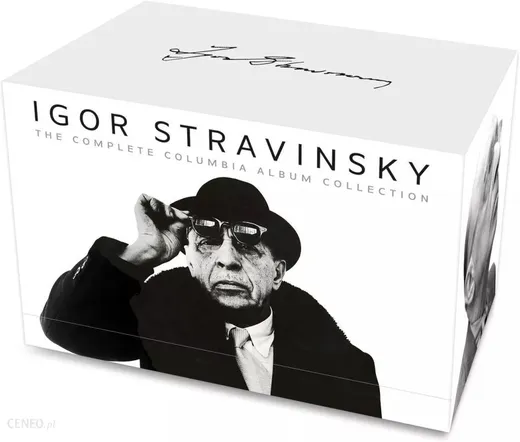
The Complete Columbia Album Collection
2015 · Kompilation
Perséphone
2018 · Sonstiges
Musical Revolutionary
o. J. · Sonstiges
Rite of Spring
o. J. · Sonstiges
Stravinsky: Chamber Music (The American Chamber Players)
o. J. · Sonstiges
Symphonies of Wind Instruments and more (Detroit Chamber Winds and Friends)
o. J. · Sonstiges
The Rite of Spring, Pulcinella
o. J. · Sonstiges
Gezeigt wird eine Auswahl von 25 Veröffentlichungen. Vollständige Diskografie bei MusicBrainz
Beschreibung
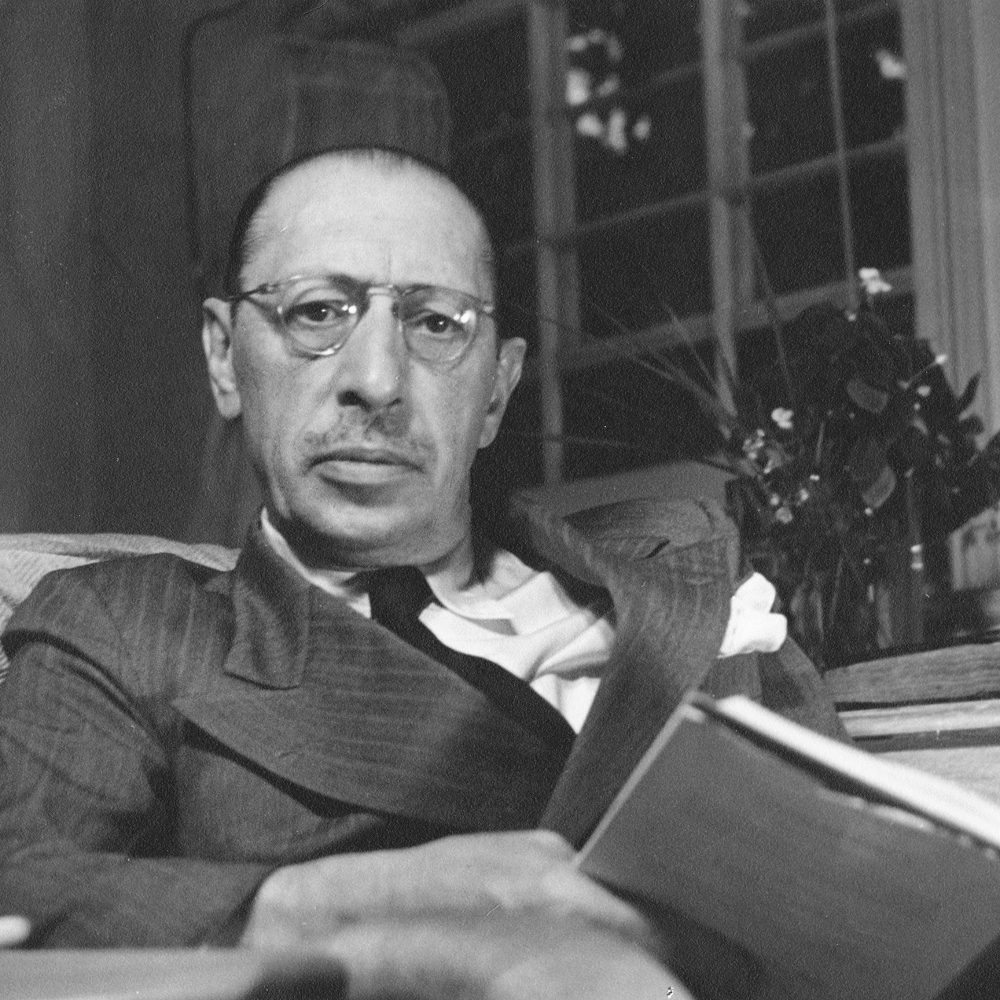
Igor Fyodorovich Stravinsky (Russian: Игорь Фёдорович Стравинский, Igor' Fëdorovič Stravinskij) (June 17, 1882 – April 6, 1971) was a Russian composer who first achieved international fame with three ballets commissioned by the impresario Serge Diaghilev and performed by Diaghilev's Ballets Russes (Russian Ballet): L'Oiseau de feu ("The Firebird") (1910), Petrushka (1911), and Le sacre du printemps ("The Rite of Spring") (1913). The Rite, whose premiere provoked a riot, transformed the way in which subsequent composers thought about rhythmic structure; to this day its vision of pagan rituals enacted in an imaginary ancient Russia continues to dazzle and overwhelm audiences.
Stravinsky's compositional career was notable for its stylistic diversity. After his first, Russian (expressionistic), phase he turned in the 1920s to neoclassicism. The works from this period tended to make use of traditional musical forms (concerto grosso, fugue, symphony), frequently concealed a vein of intense emotion beneath a surface appearance of detachment or austerity, and often paid tribute to the music of earlier masters, for example J.S. Bach, Verdi and Tchaikovsky.
In the 1950s he adopted serial procedures, using the new techniques over the final twenty years of his life to write works that were briefer and of greater rhythmic, harmonic, and textural complexity than his earlier music. Their intricacy notwithstanding, these pieces share traits with all of Stravinsky's earlier output; rhythmic energy, the construction of extended melodic ideas out of a few cells comprising only two or three notes, and clarity of form, instrumentation, and of utterance. Some new ideas state that this "dodecaphonic period" is in fact NOT an independent stylistic period. Stravinsky only started using the twelve-tone system after the death of Schönberg in 1951. At that time dodecaphony was a well-known and widely spread system that was generally accepted as a valuable 'replacement' of the tonal system. Therefore, some musicologists thought it wiser to consider the serial works of Stravinsky as a sort of neo-dodecaphony, meaning that they are also conceived as "neoclassic".
Stravinsky achieved fame as a pianist and conductor, often at the premieres of his works. He was a writer and compiled, with the help of Alexis Roland-Manuel, a theoretical work entitled Poetics of Music, in which he famously claimed that music was incapable of "expressing anything but itself." Several interviews in which the composer spoke to Robert Craft were published as Conversations with Stravinsky. They collaborated on five further volumes over the following decade.
Kommentare
0Bitte anmelden, um zu kommentieren.
Noch keine Kommentare – sei die/der Erste, die/der etwas zu Игорь Фёдорович Стравинский schreibt!