Diskografie
-
1972
魔法の黄色い靴
-
1972
君のために生れかわろう
-
1974
TAKE OFF(離陸)

-
1974
ぼくがつくった愛のうた

-
1983
Halo
-
1987
PRIMARY COLOR
-
1988
そんなとき 女を好きになる
-
1989
Well
-
1995
Jack is a boy
-
1995
New Tune
-
1995
アイ・ライク・パーティ
-
2001
無限軌道
-
2001
MELODY
-
2001
WELCOME TO MY HOUSE
-
2001
日本
-
2002
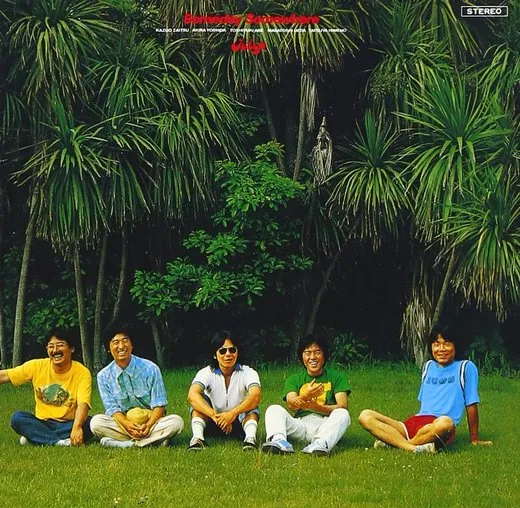
Someday Somewhere
-
2002
THE LOVE MAP SHOP
-
2002
Upside-down
-
2005
2222年ピクニック
-
2005
I dream
-
2005
THE 10th ODYSSEY
-
2007
run
Live, Kompilationen & Demos 3
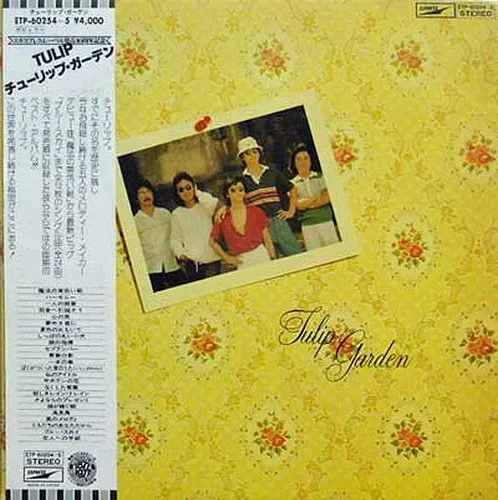
Gezeigt wird eine Auswahl von 25 Veröffentlichungen. Vollständige Diskografie bei MusicBrainz
Beschreibung
チューリップ (or TULIP) is a Japanese pop and rock band formed in December 1968 in Fukuoka. Thy existed from 1971 until 1989, from 1997 until 2008, from 2012 until 2013 and have been active active since 2016.
Members: ** Vocals, Guitar & Keyboards: 財津和夫 (Kazuo Zaitsu; since 1970) ** Vocals, Guitar & Keyboards: 姫野達也 (Tatsuya Himeno; since 1972) ** Drums & Vocals: 上田雅利 (Masatoshi Ueda; since 1972) ** Bass, Vocals & Guitar: 宮城伸一郎 (Shinichiro Miyagi; since 1980)
Ex members: ** Bass & Vocals: 吉田彰 (Akira Yoshida; 1970-1979; passed away 2024) ** Drums & Vocals: 伊藤薫 (Kaoru Ito; 1980-1985) ** Drums & Vocals: 松本淳 (Jun Matsumoto; from 1985-1987) ** Keyboards & Vocals: 丹野義昭 (Yoshiaki Tanno; from 1985-1989) ** Vocals & Keyboards: 高橋裕幸 (Hiroyuki Takahashi; from 1987-1989) ** Guitar & Vocals: 安部俊幸 (Toshiyuki Abe; from 1972-1985; passed away 2014)
History: The group was founded while its members were students at Seinan Gakuin University, initially under the name “The Four Singers,” led by Koji Tanaka. Kazuo Zaitsu joined alongside Akira Yoshida and Nobuyuki Suehiro, forming the core that would later evolve into Tulip.
During their amateur period (1968–1971), Zaitsu developed a reputation for aggressively recruiting talented musicians, earning the nickname “the band breaker.” He met Suehiro in a university chapel and quickly invited him to join. Shinji Soda was also recruited from another band. The group gained local popularity in Fukuoka through live performances, radio appearances, and television spots, eventually forming a fan club.
Despite early success, internal tensions grew. Suehiro and Soda became uncertain about pursuing professional music, while Zaitsu remained highly ambitious. After recording in Tokyo, both members decided to leave the group, with Suehiro telling Zaitsu he could no longer “walk the path laid out by him.” Years later, in a 1994 reunion program, the former members openly discussed these conflicts. Zaitsu reflected on his own behavior and acknowledged the strain his leadership had caused. The reunion ended on a reconciliatory note, with the musicians performing together again and revisiting their early recordings.
A key location in the band’s formative years was the live music café “Shōwa” in Fukuoka’s Tenjin district. Originally intended as a restaurant, it became a live venue during the folk music boom, catering mainly to students. Tulip and many other notable artists performed there. After losing members, Zaitsu rebuilt the band by recruiting musicians from other groups, eventually forming the classic lineup: Zaitsu (vocals, guitar, keyboards), Tatsuya Himeno (vocals, guitar, keyboards), Toshiyuki Abe (guitar), Masatoshi Ueda (drums), and Akira Yoshida (bass). With no proper rehearsal space, they practiced overnight at the venue after closing hours.
In 1970, The Four Singers disbanded. Zaitsu, Yoshida, and Suehiro regrouped with Soda to officially form Tulip. In 1971, they recorded an independent EP in Fukuoka and moved to Tokyo, releasing their first single, “Watashi no Chiisana Jinsei.” Shortly after, Soda and Suehiro left, forcing another restructuring. Zaitsu rebuilt the band again, finalizing the five-member lineup that would define their early success.
In 1972, Tulip made their major debut with “Mahō no Kiiroi Kutsu.” Their breakthrough came in 1973 with “Kokoro no Tabi,” which gradually climbed the charts and reached number one after five months. This success established them as a major act. They followed with hits such as “Seishun no Kage” (1974), “Saboten no Hana” (1975), and “Niji to Sneakers no Koro” (1979). Their early sound featured British-influenced melodies and distinctive twin vocals by Zaitsu and Himeno.
Tulip became especially known for their live performances. During the 1970s, they toured extensively across Japan, sometimes performing over 50 shows a year. In 1982, they celebrated their 1,000th concert. They also staged several large-scale outdoor concerts, beginning in 1978 at Suzuran Highlands, followed by increasingly ambitious events with elaborate staging and large audiences.
In 1979, after the album “Someday Somewhere,” Ueda and Yoshida left the band. Tulip entered a second phase with new members Shinichiro Miyagi (bass) and Kaoru Ito (drums). Their music shifted toward a more synthesized, conceptual style, exploring themes such as space, peace, and environmental issues. However, commercial success declined compared to their earlier years.
In 1985, further internal conflicts led to the departure of Himeno, Abe, and Ito. Zaitsu later described lingering tensions, while Himeno cited differences in musical direction. Tulip continued with changing lineups, entering a third phase characterized by a more electronic, city-pop sound. Despite continued activity, the band struggled to regain its former popularity.
In 1989, Tulip released their final album “Well” and embarked on a farewell tour. The band officially disbanded after their final concert on July 8 at Nakano Sunplaza. Zaitsu then focused on his solo career.
Although Zaitsu initially believed a reunion was impossible, Tulip reformed in 1997 after encouragement from Himeno. The reunion included most original members and was followed by tours and new releases. Over the next decade, the band reunited multiple times, focusing primarily on songs from their early and second phases.
Notable reunion activities included a symbolic gathering at Kinkaku-ji in 1999, fulfilling a long-standing promise made by Zaitsu. Anniversary tours continued through the 2000s, including the 30th, 35th, and 40th anniversaries.
In 2007, the band announced a final farewell, though they continued to reunite occasionally for special events. A one-night-only reunion took place in 2011, followed by further anniversary tours. Guitarist Toshiyuki Abe passed away in 2014, marking a significant loss for the group.
Tulip celebrated their 45th anniversary with a national tour beginning in 2016, though it was temporarily halted due to Zaitsu’s health issues. Activities resumed in 2018 and concluded successfully in 2019.
In 2022, marking their 50th anniversary, Tulip conducted another commemorative tour, focusing on their classic repertoire. Zaitsu later indicated that new recordings were unlikely, signaling a shift toward preserving their legacy rather than creating new material.
In 2024, original bassist Akira Yoshida passed away.
Throughout their career, Tulip remained defined by strong songwriting, evolving musical styles, and a deep connection to their live audience. Their legacy continues as one of the most influential pop-rock acts to emerge from Japan in the 1970s.
Kommentare
0Bitte anmelden, um zu kommentieren.
Noch keine Kommentare – sei die/der Erste, die/der etwas zu チューリップ schreibt!