Beschreibung
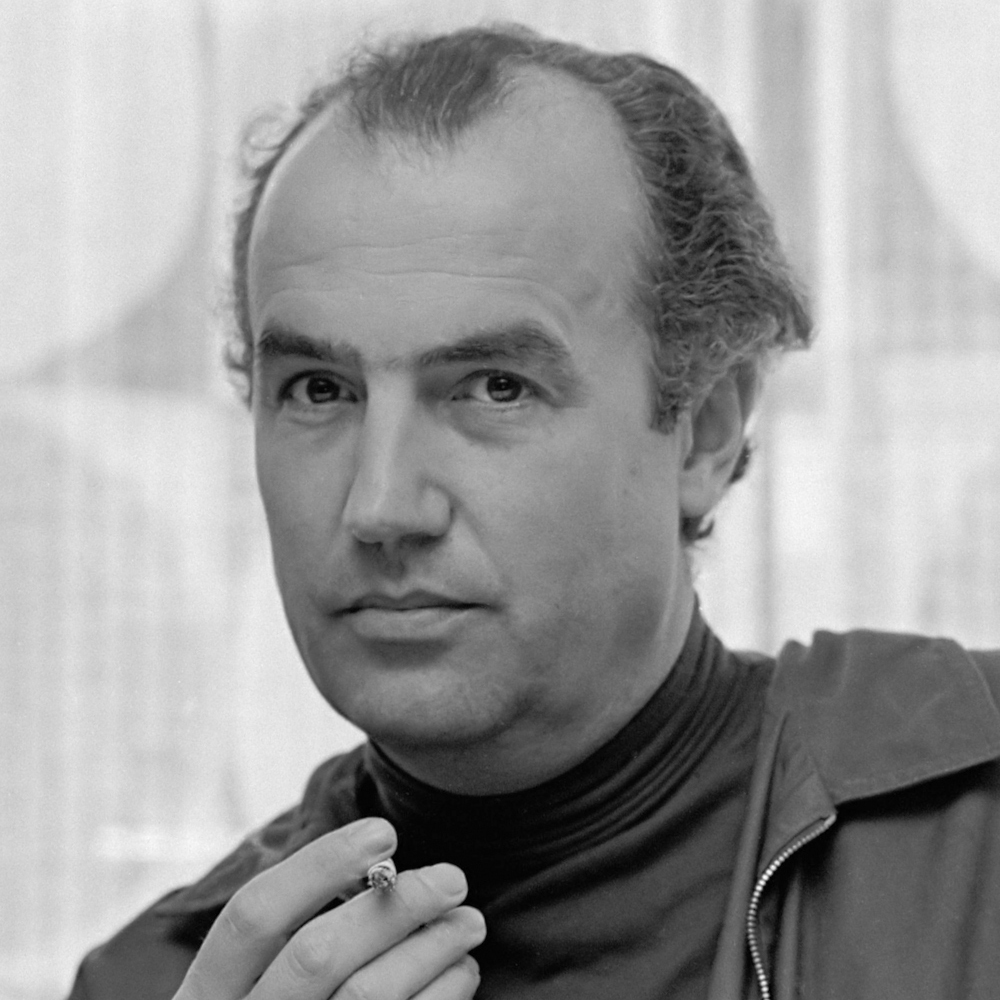
Luigi Nono (29 January 1924 – 8 May 1990) was an Italian avant-garde composer of classical music. He remains one of the most prominent composers of the 20th century.
Born in Venice, Italy, Nono was a member of a wealthy artistic family, and his grandfather was a notable painter. Nono began music lessons with Gian Francesco Malipiero in 1941 at the Venice Conservatory where he acquired knowledge of the Renaissance madrigal tradition, amongst other styles. After graduating with a degree in law from the University of Padua, he was given encouragement in composition by Bruno Maderna.
In 1950, he attended the "Ferienkurse für neue Musik" in Darmstadt, where he met composers such as Edgard Varèse and Karlheinz Stockhausen. Works from this first period include: Polifonica-Monodica-Ritmica (1951), Epitaffio per Federico García Lorca (1952-1953), La victoire de Guernica (1954) and Liebeslied (1954). He increasingly rejected the analytical approach of serialism, as evidenced by the following works: Incontri (1955), Il canto sospeso, (1955-1956), et Cori di Didone (1958).
He married Arnold Schönberg's daughter Nuria in 1955.
Nono was committed to socialism. He joined the Communist party in 1952. His avant-garde music was also a revolt against bourgeois culture. As such, he avoided most normal concert genres in favor of opera and electronic music, and sought to bring music to factories. He made frequent recourse to political texts in his work. Many of his works are overtly political: Il canto sospeso (1956), based on the letters of victims of wartime oppression, which brought him international fame; Diario polacco (1958), Intolleranza, (1960), Intolleranza (1961), La fabbrica illuminata (1964), Ricorda cosa ti hanno fatto ad Auschwitz (1966), Non consumiamo Marx (1969), Ein Gespenst geht um in der Welt (1971), Canto per il Vietnam (1973), and Al gran sole carico d'amore (1975). From 1956 onward, he was increasingly interested in electronic music, first at the "Elektroakustische Experimentalstudio" at Gravesano (Scherchen). Electronic music is involved in works like Como una ola de fuerza y luz for soprano, piano, orchestra and tape (1971-1972), ...sofferte onde serene... for piano and tape (1974-1977) and especially Al gran sole carico d'amore (1972-1975).
After 1980 he worked in the "Experimentalstudio der Heinrich Strobel-Stiftung des Südwestfunks" in Freiburg, where he resolutely turned to live electronics. He became increasingly interested in the properties of sound as such. The new approach became apparent in works such as Quando Stanno Morendeo Diario polacco n° 2 (1982), Guai ai gelidi mostri (1983) et Omaggio a Kurtág (1983), but above all in his last opera Prometeo (1984). In the same spirit he wrote Fragmente - Stille, an Diotima (1980), No hay caminos, hay que caminar... Andrei Tarkovski pour 7 groupes instrumentaux (1987), La lontananza nostalgica utopica futura for violin, live electronics and tape (1988).
Alben
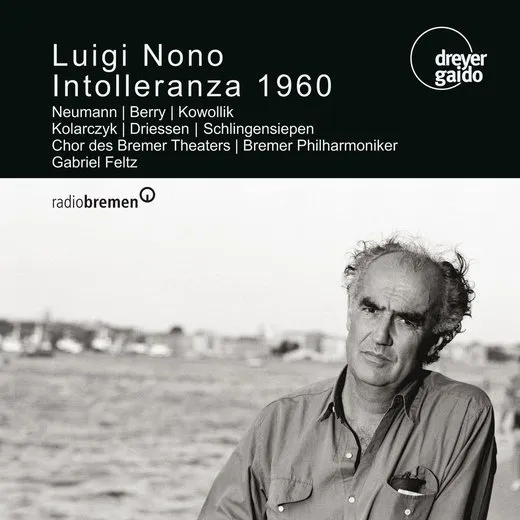
Intolleranza 1960
2013-03-26
Quando Stanno Morendo
2008
La lontananza nostalgica utopica futura
2000
Orchestral Works & Chamber Music
2000
Recital
1997
Strutture per pianoforte
1997
Wien Modern II: Hommage à Andrei Tarkovsky
1996-10-29

Isolamenti 1938-1945 - Concerto N. 2
1996
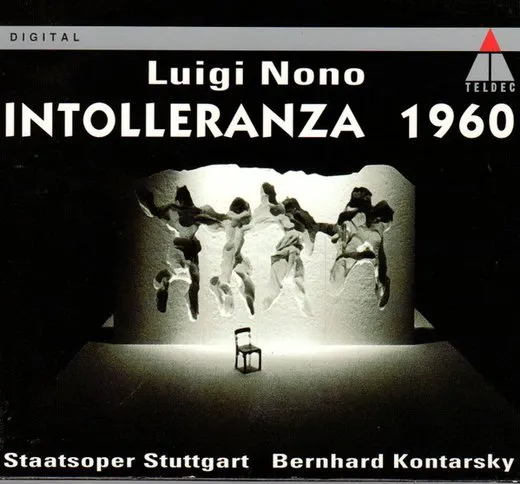
Intolleranza 1960
1995
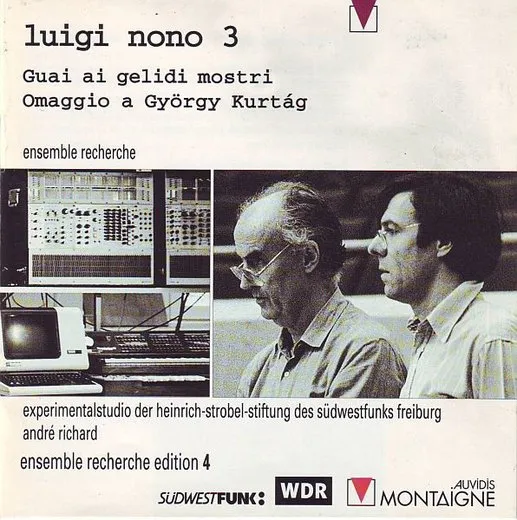
Luigi Nono 3: Guai ai gelidi mostri / Omaggio a György Kurtág
1995
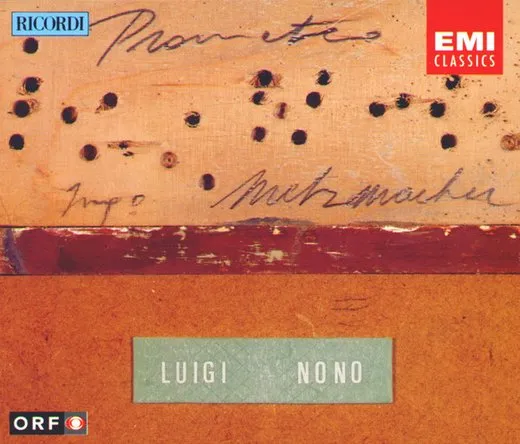
Prometeo
1995
Como una ola de fuerza y luz / Epitaffio 1 & 3
1994

Das Atmende Klarsein / ...Sofferte Onde Serene... / Con Luigi Dallapiccola (Zeitfluß 93)
1994
La Lontananza Nostalgica Utopica Futura
1994
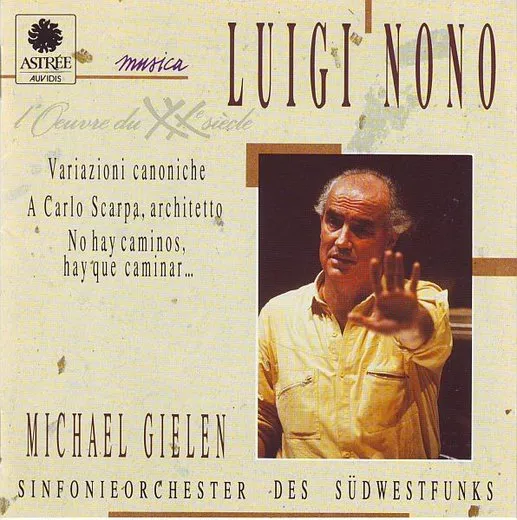
Variazioni canoniche / A Carlo Scarpa, architetto / No hay caminos, hay que caminar .. (Sinfonieorchester des Südwestfunks feat. conductor: Michael Gielen)
1993-09-01
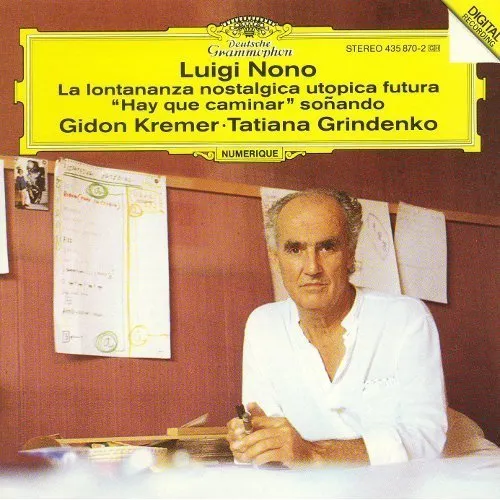
La lontananza nostalgica utopica futura / "Hay que caminar" soñando
1992
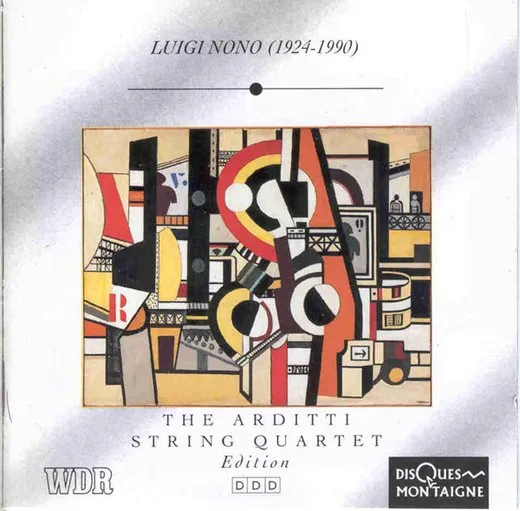
Fragmente / Hay que caminar
1991
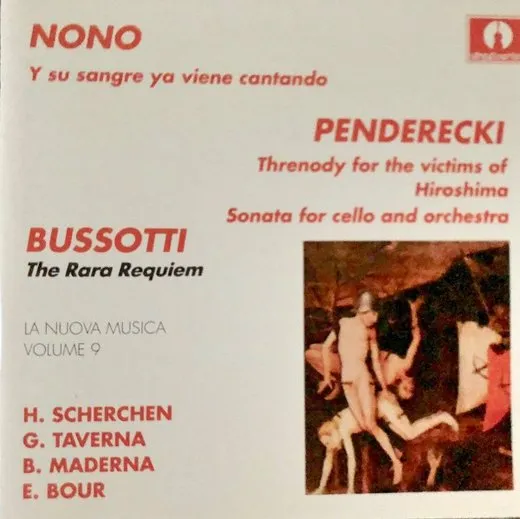
Nono: Y su sangre ya viene cantando / Penderecki: Threnody for the victims of Hiroshima / Sonata for cello and orchestra / Bussoti: The Rara Requiem
1991
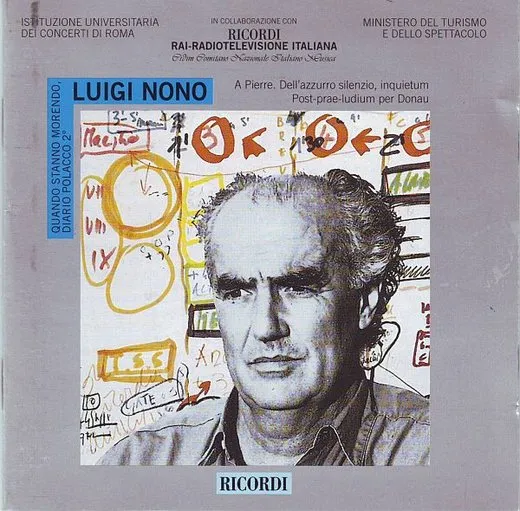
Quando stanno morendo, Diario Polacco 2° / A Pierre. Dell'azzurro silenzio, inquietum / Post-prae-ludium per Donau
1991

La Nuova Musica - Volume 1
1988

Fragmente - Stille, an Diotima
1986

Canti di vita e d’amore / Per Bastiana / Omaggio a Vedova
1973
Un volto, e del mare / Non consumiamo Marx
1969
La fabbrica illuminata / Ha venido, canciones para Silvia / Ricorda cosa ti hanno fatto in Auschwitz
1968
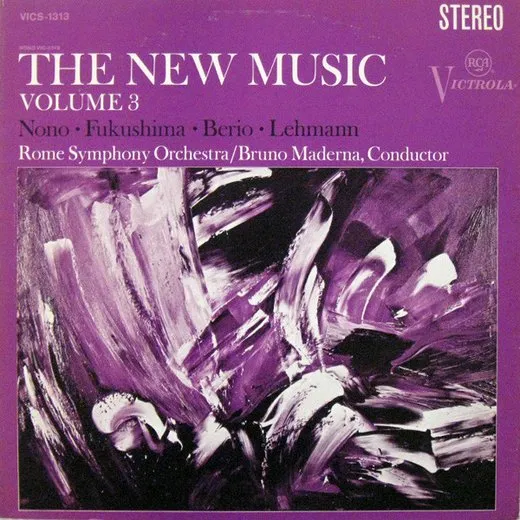
The New Music, Volume 3
1968
Kommentare
0Bitte anmelden, um zu kommentieren.
Noch keine Kommentare – sei die/der Erste, die/der etwas zu Luigi Nono schreibt!