Beschreibung
Dick Farney ((Farnésio Dutra e Silva - Nov 14,1921 Rio de Janeiro - Aug 4,1987 São Paulo) was an outstanding singer, instrumentalist and composer who contributed decisively to the renovation of Brazilian popular music with the incorporation of jazz harmonies and style. Having been the first artist ever to record "Tenderly," which would become an international hit later in the interpretation of Nat "King" Cole, Farney had hits in Brazil that announced the soon-to-be bossa nova genre, such as "Copacabana" and "Teresa da Praia" (the latter having been recorded in duet with Lúcio Alves). He also worked on the films Somos Dois (1950, by Milton Rodrigues), Carnaval Atlântida (1952, by José Carlos Burle), and Perdidos de Amor (1953, by Eurides Ramos). The son of a pianist and female singer, Farney became a classical pianist. His first recording as a singer came in 1944 as the crooner of the Ferreira Filho orchestra with "The Music Stopped" (Rodgers/Hart). As a solo singer, always singing in tha Bing Crosby's style, his first recording was two years later, interpreting the samba-canção "Copacabana" (João de Barro/Alberto Ribeiro), that would become one of his classics. Still in 1946, he went to the U.S. to perform with Cole, Bill Evans, and David Brubeck. In the next year, he had another season in that country, performing for two months at NBC radio and doing live shows in Hollywood, Chicago, and San Francisco. Dick Farney launched "Tenderly" (Walter Gross) in that period through Majestic Records. Back in Brazil, he had success with the songs "Marina" (Dorival Caymmi), "Um Cantinho e Você" (José Maria de Abreu/Jair Amorim), and "Nick Bar" (Garoto/José Vasconcelos).In the early '50s, he had success with "Uma Loira" (Hervê Cordovil), "Alguém Como Tu" (José Maria de Abreu/Jair Amorim), "Sem Esse Céu," and "Ranchinho de Palha" (both by Luís Bonfá). In 1954, he formed the jazzy Dick Farney e Seu Conjunto, in which he played the piano. A new phase began in this year, marked by his association with Tom Jobim, that announced the forthcoming bossa nova times; in that year, "Teresa da Praia" (Tom Jobim/Billy Blanco) became a huge hit, interpreted by Farney and Lúcio Alves. The song intended to discredit the so-called rivalry between the two singers. In the same year, Farney participated in the Sinfonia do Rio de Janeiro (Tom Jobim/Billy Blanco). In 1959, he had his own show at TV Record (São Paulo), and in 1965, he and Betty Faria hosted the Dick e Betty 17 show at TV Globo (Rio de Janeiro). In 1965, Farney launched an album through Elenco with "Você," another of his biggest hits. In 1971, Farney formed a trio with bassist Sabá (Sebastião Oliveira da Paz) and drummer Toninho (Antônio Pinheiro Filho) that performed at Flag's nightclub. His last record was a piano solo tape, recorded in his home, in Sao Paulo.
Alben
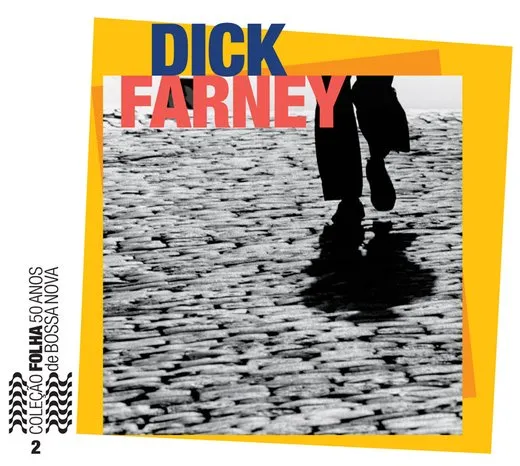
Coleção Folha 50 anos de bossa nova, volume 2: Dick Farney
2008-08-10
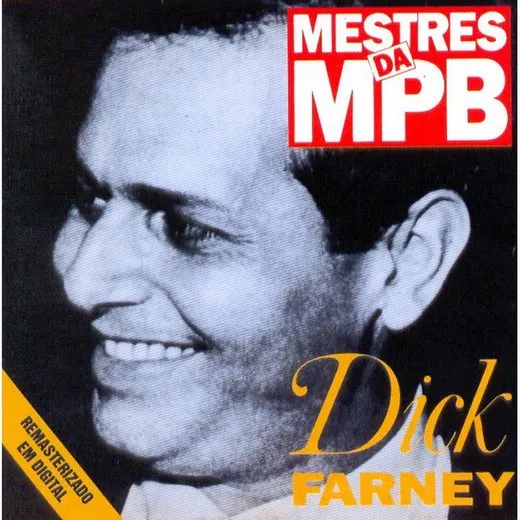
Mestres da MPB
1994
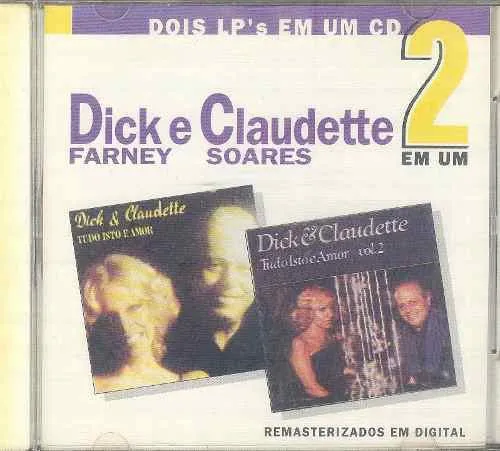
Tudo Isto É Amor & Tudo Isso É Amor Vol.2
1993
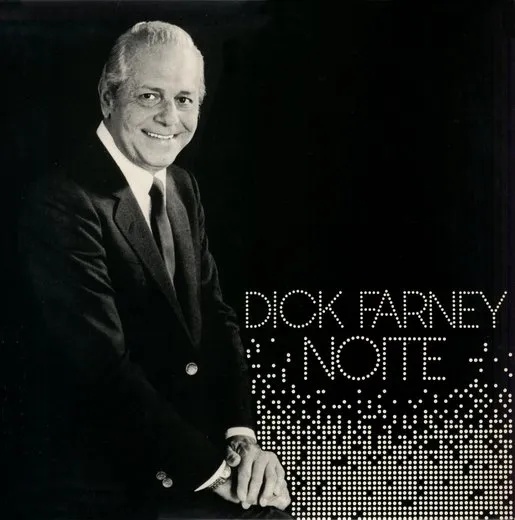
Noite
1981
Um Piano Ao Cair Da Tarde
1974

Jam Session Das Folhas
1961

Atendendo A Pedidos
1958

That Old Black Magic / National Emblem March / Peanut Butter
1947-11
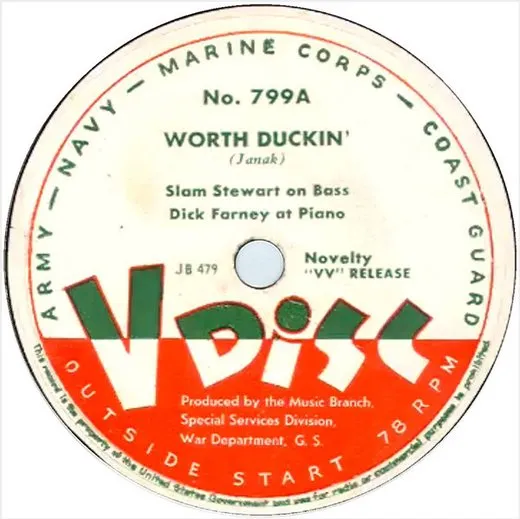
Worth Duckin’ / I Must Have That Man
1947-09

Somebody Loves Me / These Foolish Things
1947-08
Meus Momentos - Dick Farney
A Arte do Espetáculo
A música brasileira deste século por seus autores e intérpretes: Dick Farney
Kommentare
0Bitte anmelden, um zu kommentieren.
Noch keine Kommentare – sei die/der Erste, die/der etwas zu Dick Farney schreibt!