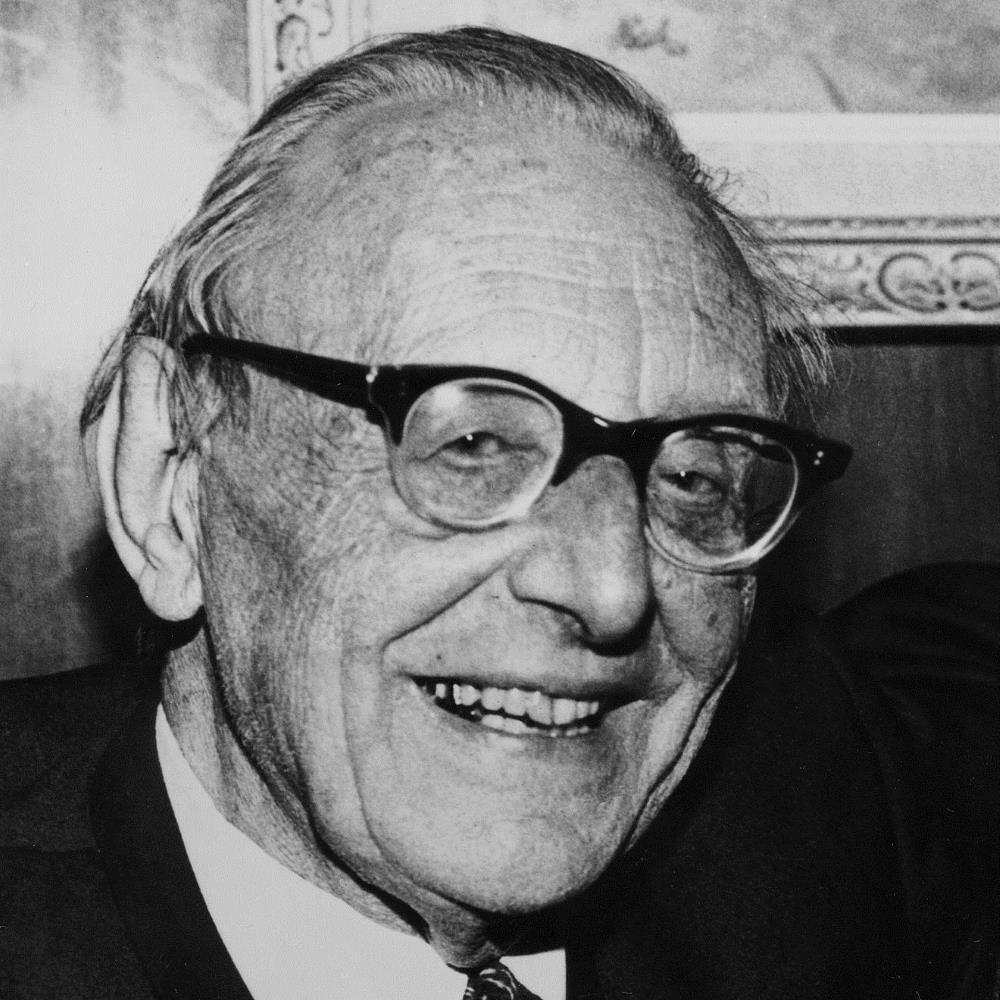
Beschreibung
Carl Orff (10th July 1895–29th March 1982) was a German composer, most famous for his Carmina Burana (1937), and an important and influential music educator.
Orff was born in Munich and came from a Bavarian family that was very active in the German military. His father's regimental band supposedly often played the compositions of the young Orff. He studied at the Munich Academy of Music until 1914, then served in the military during World War I. Afterwards he held various positions at opera houses in Mannheim and Darmstadt, later to return to Munich to further pursue his musical studies.
From 1925 Orff was the head of a department and co-founder of the Guenther School for gymnastics, music, and dance in Munich, where he worked with musical beginners. Having constant contact with children, this is where he developed his theories in music education. While Orff's association, or lack thereof, with the Nazi party has never been conclusively established, his Carmina Burana was hugely popular in Nazi Germany after its premiere in Frankfurt in 1937, receiving numerous performances (although one Nazi critic reviewed it savagely as "degenerate", implying a connection with the contemporaneous, and infamous, exhibit of Entartete Kunst). He was one of the few German composers under the Nazi regime who responded to the official call to write new music for A Midsummer Night's Dream, after the music of Felix Mendelssohn had been banned, which in itself suggests where his sympathies lay; others refused to cooperate in this.
Orff was a personal friend of Kurt Huber, one of the founders of the resistance movement Die Weiße Rose (the White Rose), and who was condemned to death by the Volksgerichtshof and executed by the Nazis in 1943. After World War II, Orff claimed that he was a member of the group, and was himself involved in the resistance, but there was no evidence for this other than his own word, and other sources dispute his claim).
Orff is buried in the Baroque church of the beer-brewing Benedictine priory of Andechs, south of Munich.
Orff is best known for Carmina Burana (1937), a "scenic cantata". It is the first of a trilogy, Trionfi, which also includes Catulli Carmina and Trionfo di Afrodite. These compositions reflected his interest in medieval German poetry. Together the trilogy is called Trionfi, meaning "triumphs". The work was based on a thirteenth-century erotic verse written by the Goliards, found in a manuscript dubbed the Codex latinus monacensis, which had been discovered in a Bavarian monastery in 1803. The term "Goliards" was often used to describe students who wrote secular verse in the Middle Ages. While "modern" in some of his compositional techniques, Orff was able to capture the spirit of the medieval period in this trilogy, with infectious rhythms and easy tonalities. The mediaeval poems were written in an early form of German and Latin.
With the success of Carmina Burana, Orff orphaned all of his previous works except for Catulli Carmina and the En trata, which were rewritten until acceptable by Orff. He was reluctant to call any of his works simply operas. For example, he called Der Mond ("The Moon") (1939) a "Märchenoper" or Fairytale Opera, and placed Die Kluge ("The Wise Woman") (1943) in the same category. About his Antigone (1949), Orff said specifically that it was not an opera, rather a Vertonung, a "musical setting" of the ancient tragedy. The text is a German translation, by Friedrich Hölderlin, of the Sophocles play of the same name. The orchestration relies heavily on the percussion section, and is otherwise fairly simple.
Orff's last work, De Temporum Fine Comoedia ("A Play of the End of Time"), had its premiere at the Salzburg music festival on 20th August 1973, performed by Herbert von Karajan and the Cologne Radio Symphony Orchestra and Chorus. In this highly personal work, Orff presented a mystery play, in which he summarised his view on the end of time, sung in Greek, German, and Latin.
Alben
Carmina Burana
2004
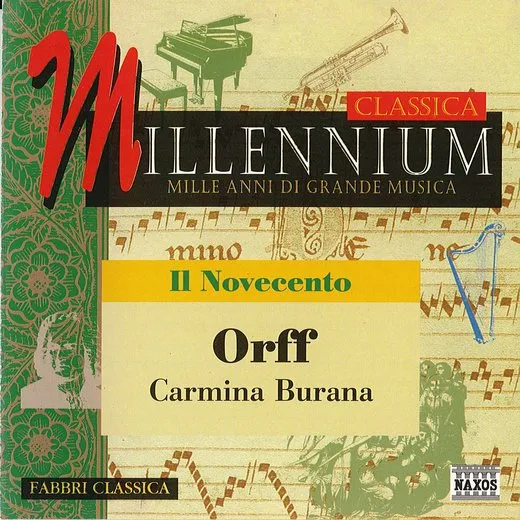
Orff: Carmina Burana
1998
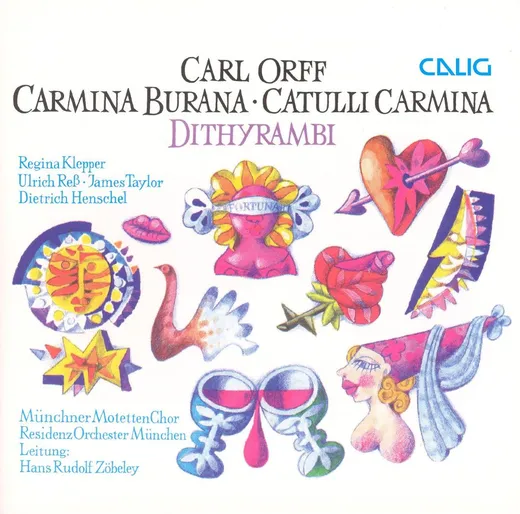
Orff: Carmina Burana; Catulli Carmina; Dithyrambi
1994
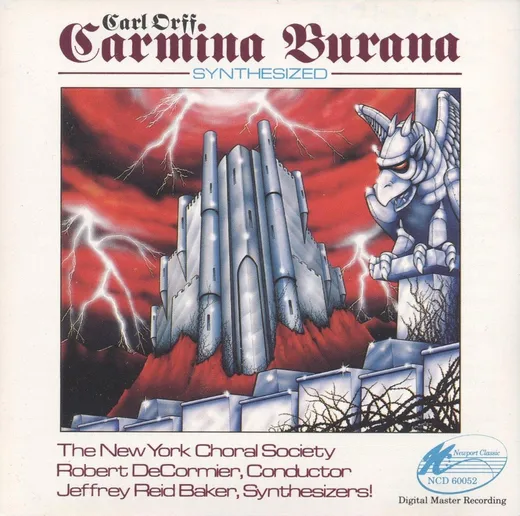
Carmina Burana Synthesized
1989
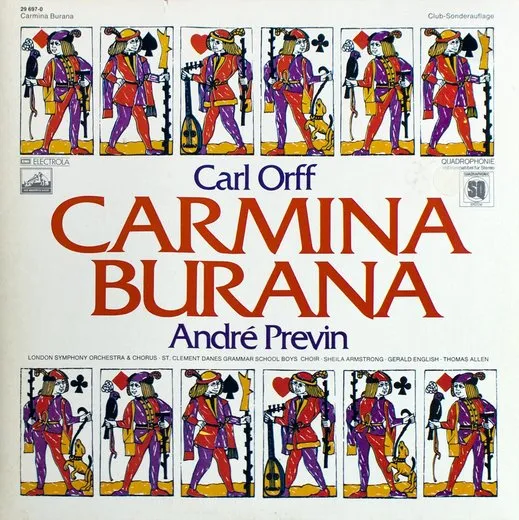
Carmina Burana
1975
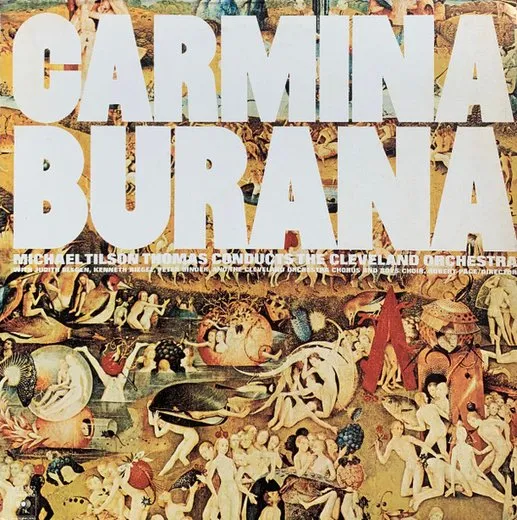
Carmina Burana
1974
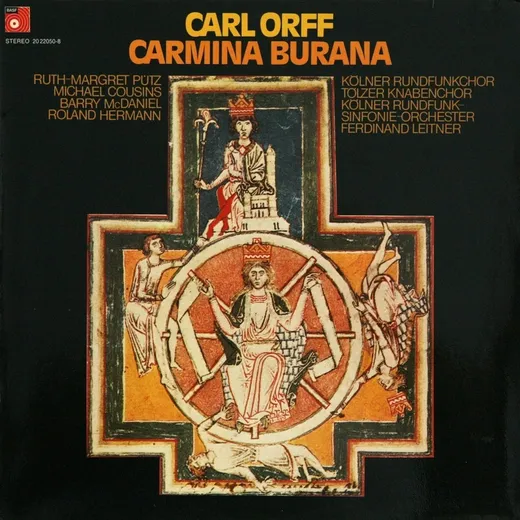
Carmina Burana
1974
Carmina Burana
1974

Carmina Burana: Cantiones profanae
1973

Carmina Burana
1972

Catulli Carmina
1971
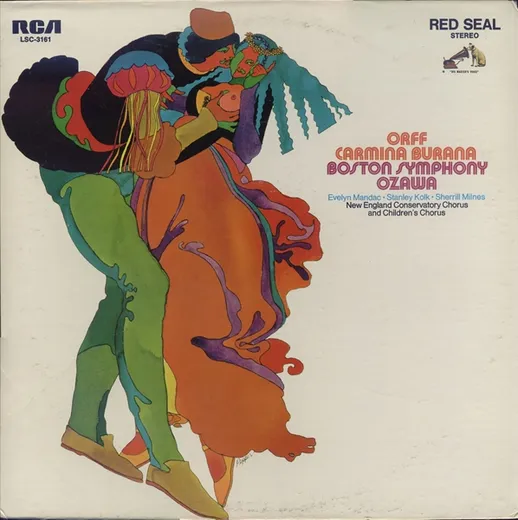
Carmina Burana
1970
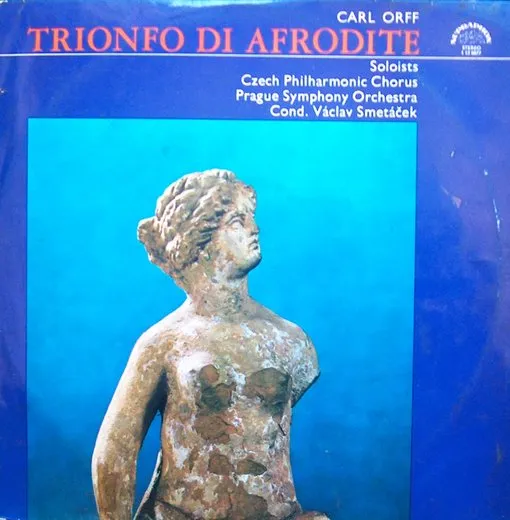
Trionfo di Afrodite
1970
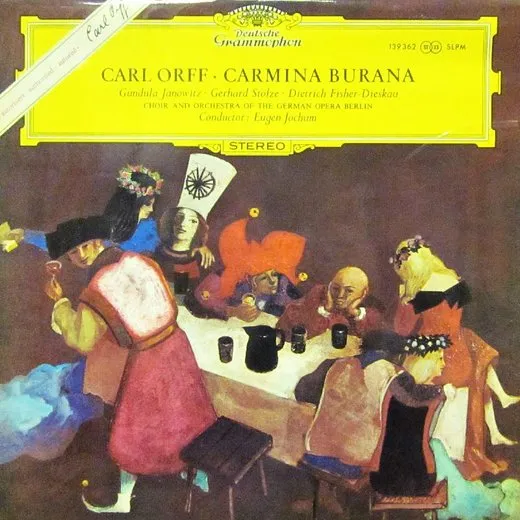
Carmina Burana
1968
Catulli Carmina (Remastered)
1967

Carmina Burana
1966-08
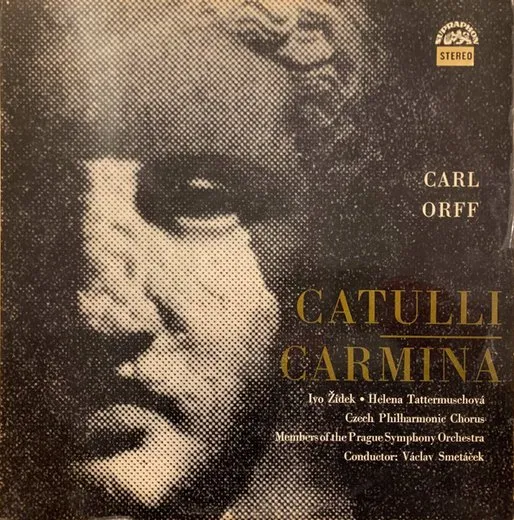
Catulli Carmina
1965
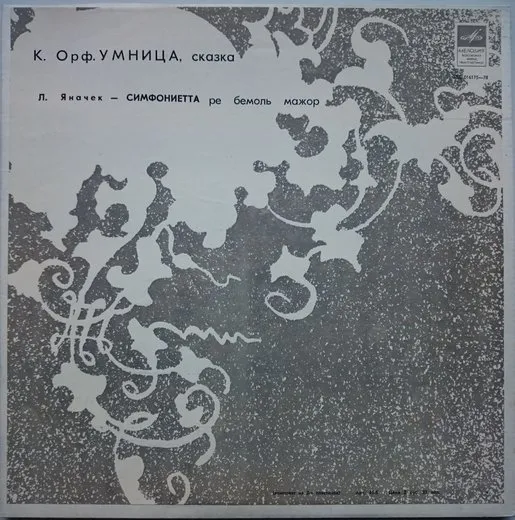
Умница / Симфониетта
1965

Carmina Burana
1961

Carmina Burana
1960
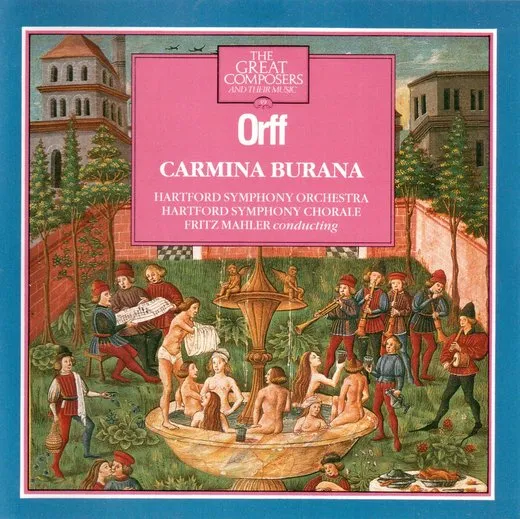
Carmina Burana
1960
Carmina Burana
1959-05
Catulli Carmina
1954
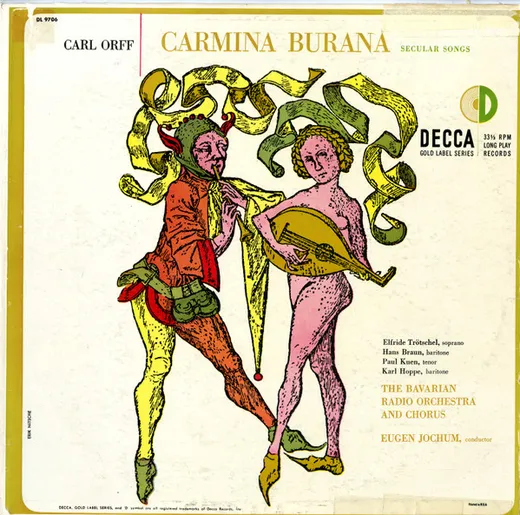
Carmina Burana
1953
1017 Carmina Burana Cantiones Profanae
Kommentare
0Bitte anmelden, um zu kommentieren.
Noch keine Kommentare – sei die/der Erste, die/der etwas zu Carl Orff schreibt!